 HR
 DE
 FR
 IT
Kvarner
The green, genteel corner of the coast next to Istria — the grand old resort of Opatija, the islands of Krk, Cres, Lošinj and Rab, all wrapped around a sheltered gulf beneath Mount Učka.
Search stays in KvarnerKvarner has an older, more refined feel than the rest of the coast: Opatija grew up as a Habsburg-era spa resort, and its villa-lined Lungomare promenade still runs for kilometres along the water. Just inland, Mount Učka and the forests of Gorski Kotar give it real greenery and cooler air than Dalmatia. It's an easy area to reach — Rijeka is the region's hub, and Krk is joined to the mainland by a bridge.
The islands set the pace. Krk is the most accessible and busiest; Cres and Lošinj, linked by a little bridge, are wilder and piney, with dolphins offshore; Rab has a walled medieval town and, unusually for Croatia, real sandy beaches at Lopar. Most beaches are pebble with clear water, and the region counts a string of Blue Flag beaches for water quality.
Where to stay in Kvarner
Kvarner splits into a mainland riviera either side of Rijeka and a group of large islands, each with its own pace. Here is how the main bases compare.
Opatija riviera (Volosko to Lovran)
The elegant, Habsburg-era side of Kvarner, where villas, parks and old hotels line the shore beneath Mount Učka. The Lungomare promenade runs for about 12 km from the fishing village of Volosko through Opatija, Ičići and Ika to Lovran, so you can walk to swim spots, cafés and restaurants. It suits couples, older travellers and anyone who likes towns that stay alive outside summer. Swimming is mostly from concrete platforms, rock and small pebble coves. Parking in central Opatija is tight, so a stay with its own space is a real plus.
Crikvenica and Novi Vinodolski
The mainland riviera south-east of Rijeka, a long-standing family resort strip with promenades, playgrounds and beaches right in town. Crikvenica's main beach has sandy sections both on the shore and in the water, which is unusual in Croatia, and Novi Vinodolski has a mixed sand, pebble and concrete town beach with plenty of sports on offer. Both are easy to reach by road with no ferry, and a good share of stays are within walking distance of the sea. Good value for families and groups.
Krk, including Baška
One of Kvarner's two biggest islands and by far the most accessible, joined to the mainland by a toll-free bridge, with Rijeka airport on the island itself. Krk town has a walled old centre and harbour, and resorts such as Malinska and Njivice suit families. At the southern end, Baška sits behind its long pebble beach under bare mountains and is the island's liveliest summer spot. Krk is the busiest island in season, but it is easy for short breaks and for anyone arriving by car.
Rab and Lopar
Rab has a compact medieval town with four bell towers, and pine and oak woods on its western side. Its big draw for families is Lopar, a village at the northern tip with a series of sandy beaches, including the long, shallow Rajska plaža. Lopar is quiet in the evenings and very child-friendly; Rab town is the place for dinners and walks. The island is reached by ferry from Stinica on the mainland or from Valbiska on Krk, which lands right in Lopar.
Cres and Lošinj
Two long, narrow islands joined by a small swing bridge at Osor. Cres is wild and thinly populated, with sheep pastures, stone villages and quiet coves. Lošinj is greener and more developed: Mali Lošinj is the main town and port, and Veli Lošinj is a smaller village a few kilometres away. The bays around Čikat, in a pine forest park near Mali Lošinj, have promenades and several beaches. Bottlenose dolphins live in the surrounding waters. It suits couples, walkers and families who want a slower pace; allow extra travel time.
Beaches
Rajska plaža, Lopar (Rab)
About 1.5 km of soft sand where the water stays knee-deep for a long way out, which makes it one of the best beaches in Croatia for small children. There are sunbeds, umbrellas, beach bars and water sports, with a water park nearby. Shade is limited, so bring your own. Walkable from most of Lopar.
Vela plaža, Baška (Krk)
A long curve of small, smooth pebbles, often given as around 1.8 km, running along the front of Baška. The sea is clear and shelves gently, with sandier patches underfoot once you are in, so it works well for families. Plenty of cafés and rentals line the back. It is busy in July and August.
Crikvenica city beach
Just north of the town centre, this is one of Kvarner's rare sandy beaches, with sand on the shore and in shallow water, alongside pebbly sections and some natural shade. It is a family favourite, close to cafés and shops. An entry fee may apply in summer.
Medveja, near Lovran
A long pebble beach in a small bay about 2 km from Lovran and 8 km from Opatija, backed by pine woods. It is roomier than the platforms in central Opatija and has restaurants and sports facilities, so it suits families. You can drive there or walk from Lovran.
Čikat bay, Mali Lošinj
A string of pebble beaches and rocky swimming spots in a pine forest park just outside Mali Lošinj, linked by a shaded seaside promenade. There are cafés, water sports and windsurfing and diving centres. Walk or cycle from town; the pines give welcome shade in the afternoon.
Lišanj, Novi Vinodolski
The main town beach, below a hotel complex in the centre. It mixes concrete, pebble and sand, with lots of sports and activities on the water and on the beach, which keeps older children busy. Easy to reach on foot from most of town.
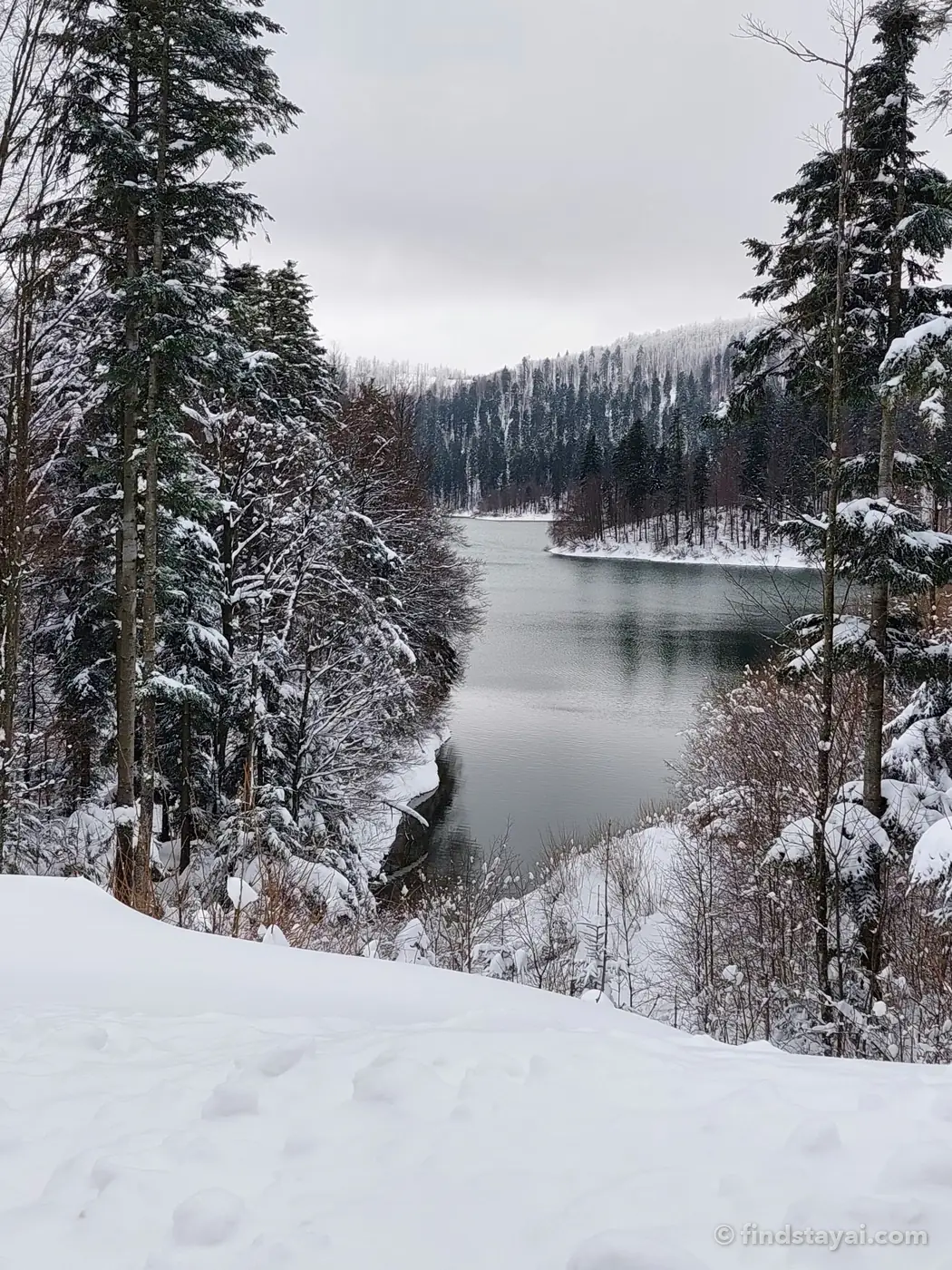
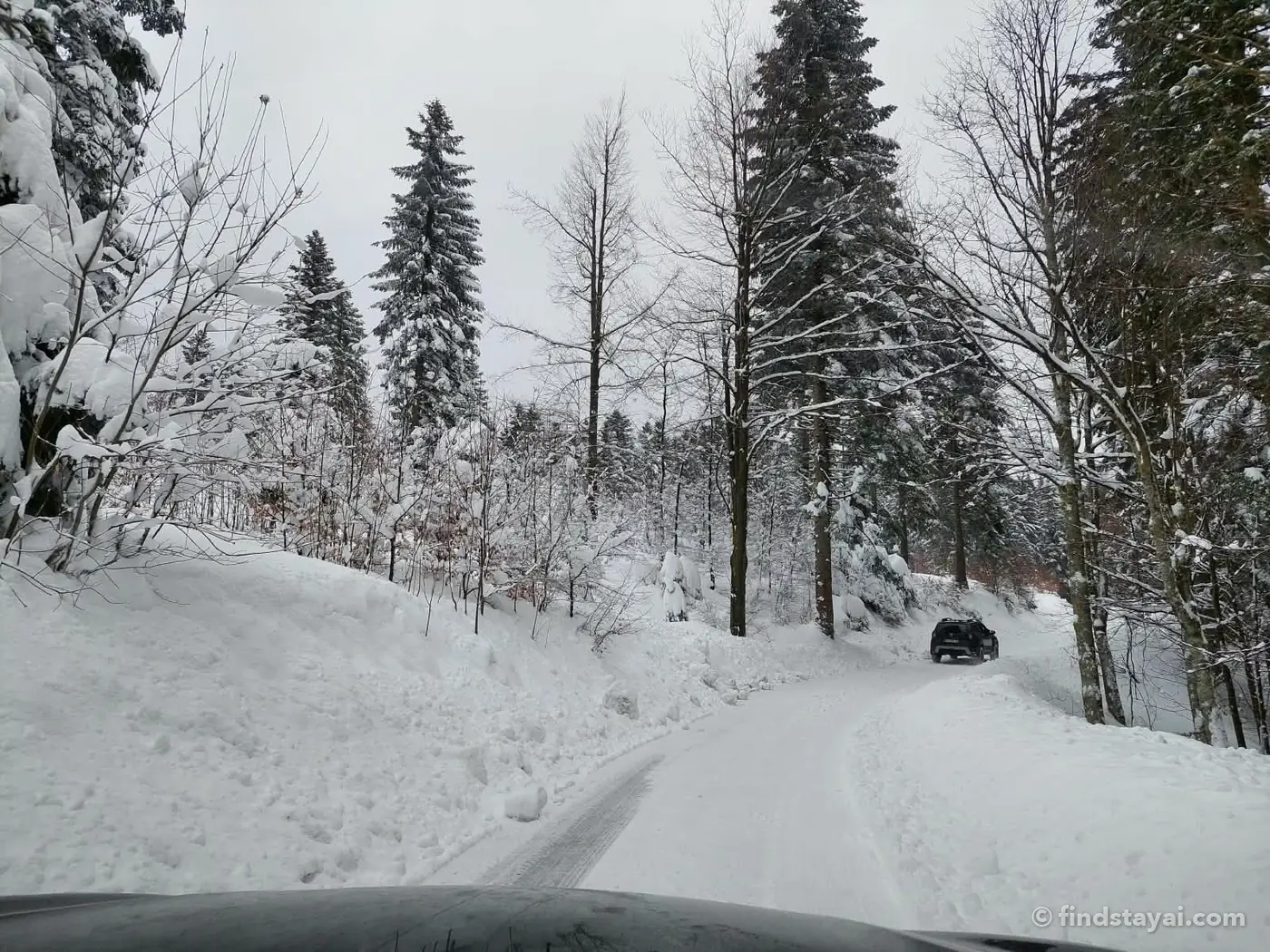
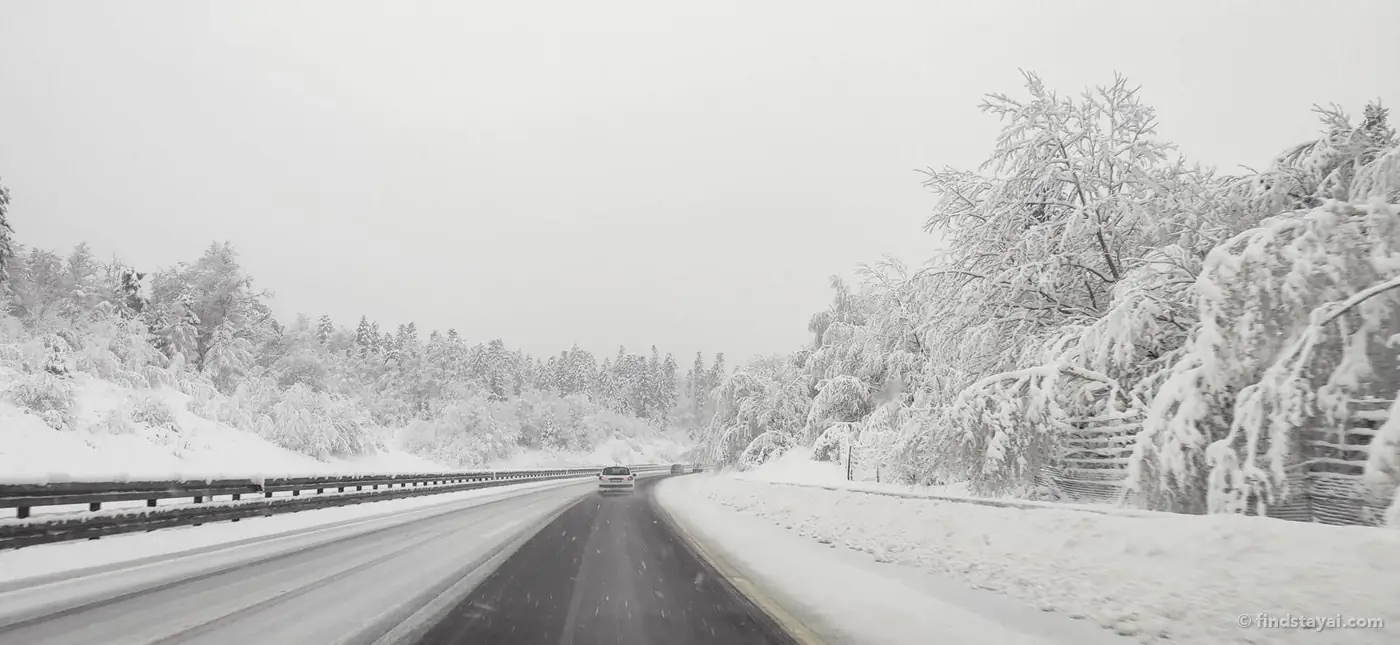
Our photos: Gorski kotar and Lika in winter
The forested highlands of Gorski kotar rise just inland from Rijeka. Taken by our team on the coast. Tap a photo to open it larger.
Getting there and around
Rijeka airport is on Krk, near Omišalj, handy for the island and roughly 40 km by road from Opatija; Pula, Trieste, Ljubljana and Zagreb are the other options. From Zagreb, the A6 motorway reaches the coast in about two hours. Krk is joined to the mainland by a road bridge with no toll since 2020. Cres and Lošinj are reached by car ferry from Brestova (Istria) to Porozina, or from Valbiska on Krk to Merag, each about 20 to 25 minutes. Rab has a short ferry from Stinica to Mišnjak and a longer year-round crossing from Valbiska to Lopar.
A car gives you the most freedom, especially on Krk, Cres and Lošinj, where villages and coves are spread out. Buses run along the Opatija riviera and between the main towns, so you can manage without a car on the mainland. Ferry queues can be long on summer weekends, so allow time. In winter the bura wind can occasionally halt ferries or close the Krk bridge. Nearly all of our Kvarner stays include parking, and many have sea views.
When to go
July and August are peak season, with the warmest sea, busy beaches and ferry queues, and the highest prices. June and September are the best balance of warm water, calmer beaches and better value, and are ideal for Lopar and Baška with children. May and October suit walking on Učka and around Cres and Lošinj. Opatija and Rijeka stay open all year, but on the islands many restaurants, beach bars and resorts close from roughly November to March. In winter, the Rijeka Carnival runs from January until the days before Lent.
Good to know
- Beaches are mostly pebble, but Baška on Krk and Lopar on Rab have rare sandy stretches.
- Krk is reached by bridge (no ferry); Cres, Lošinj and Rab are ferry islands with a slower feel.
- Greener and a touch cooler than Dalmatia — good for combining beach days with hiking on Učka.
- Opatija's Lungomare promenade is a lovely long seafront walk between villas and coves.
Find the right kind of stay
Smaller places around Kvarner
Stays in Kvarner right now
Loading current offers…
Frequently asked questions
Does Kvarner have sandy beaches?
Yes, more than most of Croatia. Lopar on Rab has several sandy beaches, including the shallow Rajska plaža, and Crikvenica's main town beach has sand on the shore and in the water. Baška on Krk is small pebble with sandier patches in the sea. Elsewhere, including Opatija, Cres and Lošinj, expect pebble, rock and concrete platforms.
Is Kvarner good for families?
Very. Lopar, Baška, Crikvenica and Novi Vinodolski all have shallow beaches, promenades and plenty of activities, and they are easy to reach by car. Many of our Kvarner stays are family-friendly apartments within a short walk of the sea, often with a sea view, a barbecue and parking.
Do I need a car in Kvarner?
On the mainland you can get by without one: buses run along the Opatija riviera and to Crikvenica, and the Lungomare is made for walking. On the islands a car is far more useful, as villages and beaches are spread out and buses are infrequent. Remember to budget time and ferry fares if you are heading to Rab, Cres or Lošinj.
Which Kvarner island is easiest to reach?
Krk, by a long way. It is joined to the mainland by a bridge with no toll, and Rijeka airport sits on the island. Rab, Cres and Lošinj all need a ferry crossing. Lošinj is the furthest, as you drive the length of Cres and cross the bridge at Osor.
When is the cheapest time to stay in Kvarner?
June and September usually offer the best value while the sea is still warm. May and October are cheaper again and good for walking and sightseeing, though fewer island restaurants are open. Mid-July to late August is the most expensive period. Opatija is also pleasant in winter, when prices are lowest.
How far is Opatija from the airport?
Rijeka airport, which is actually on the island of Krk, is roughly 40 km by road from Opatija, over the Krk bridge and around Rijeka, so allow extra time in summer traffic. Pula is further, via the Učka tunnel, and Trieste and Ljubljana are also options if you are driving in from the north.
Find your stay in Kvarner
Describe what you need — dates, who's travelling, budget, how close to the beach — and our AI finds matching apartments, rooms and houses.
Start your search →Live availability and prices come from our booking partners. Numbers above are approximate and change with the season.