 HR
 DE
 FR
 IT
Zagreb
Croatia's capital: a medieval Upper Town above elegant Austro-Hungarian squares, a lively café culture and, in December, the city voted Europe's best Christmas city break for 2026.
Search stays in ZagrebZagreb is not on the sea, and that is its charm. Around 770,000 people live here, so it feels like a real working capital rather than a resort. On the hill stand Gradec and Kaptol, the two medieval settlements that grew into the city, with St Mark's Church and its tiled roof, the Stone Gate and the Lotrščak Tower, where a cannon fires at noon. Below them, the Lower Town spreads out in 19th-century squares and a U-shaped chain of parks known as the Green Horseshoe.
It works best as a short city break or as the first stop on a longer trip. Two or three days cover the Dolac market, Tkalčićeva street, the museums, Mirogoj cemetery and Maksimir park, with Medvednica mountain at the edge of town. Plitvice Lakes and the Kvarner coast are within a morning's drive.
Advent in Zagreb 2026
Dates, the best locations, what to eat and day trips to Samobor, Karlovac and Varaždin.
Where to stay in Zagreb
Zagreb is easy to get around, so the choice is mostly about atmosphere and parking. Here is how the main areas compare.
Lower Town (Donji grad)
The grid of 19th-century streets south of Ban Jelačić Square, with the Green Horseshoe parks, most museums and the main railway station. It is the most practical base: everything is on foot and trams stop at every corner. Parking is the catch, so look for a stay with its own space or plan on a garage.
Upper Town and Kaptol
Gas lamps, cobbles and quiet evenings in the old lanes of Gradec and around the cathedral. There are few places to stay here and the lanes are steep, so it suits couples who travel light. Tkalčićeva's bars and the Dolac market are minutes away.
Maksimir and the eastern side
Leafy residential streets around the park and the zoo, with a tram straight into the centre. It is calmer than the Lower Town, and street parking tends to be easier, which suits families.
Trešnjevka and Jarun
West of the centre, local neighbourhoods with markets and good tram links, and Lake Jarun for walks and cycling. Stays are often better value, and the centre is about 15 to 20 minutes away by tram.
Novi Zagreb and Bundek
South of the Sava river, with wider streets, easier parking and the lake and park at Bundek. A good choice if you arrive by car or are heading on to the coast, as the motorway is close.
Velika Gorica
A separate town next to the airport, handy before an early flight. It has its own small Advent in winter, and the bus into Zagreb takes roughly half an hour.
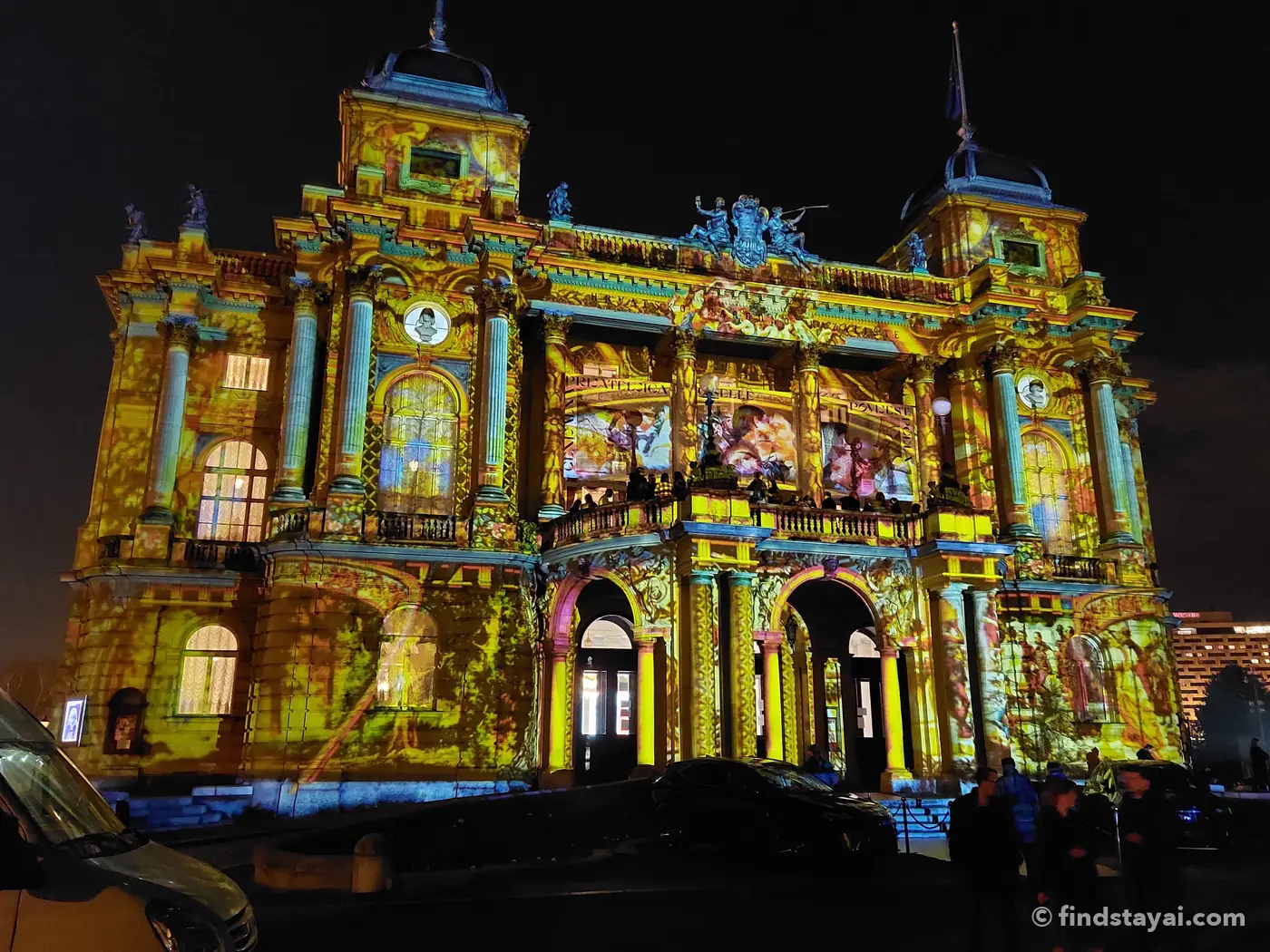
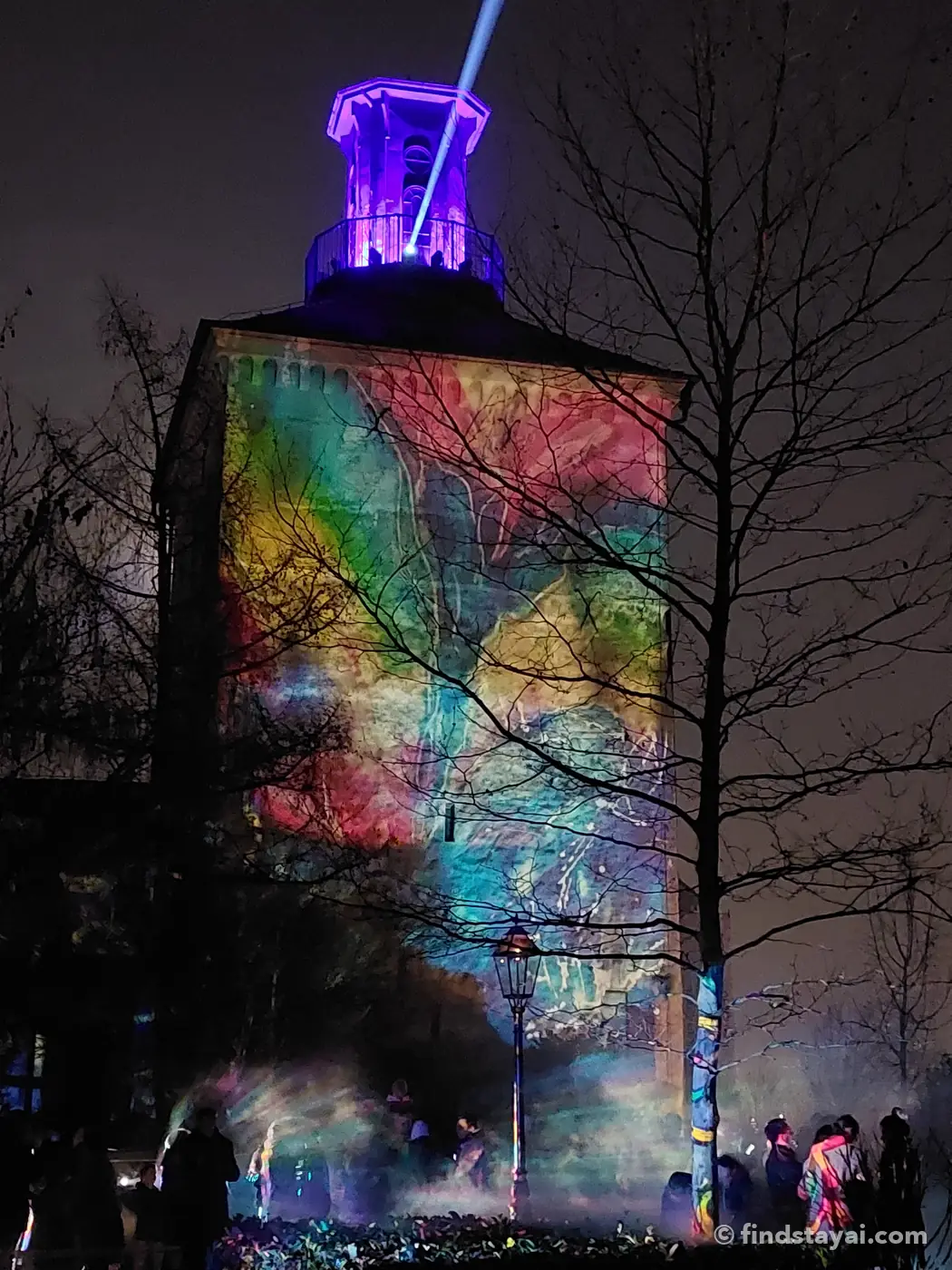
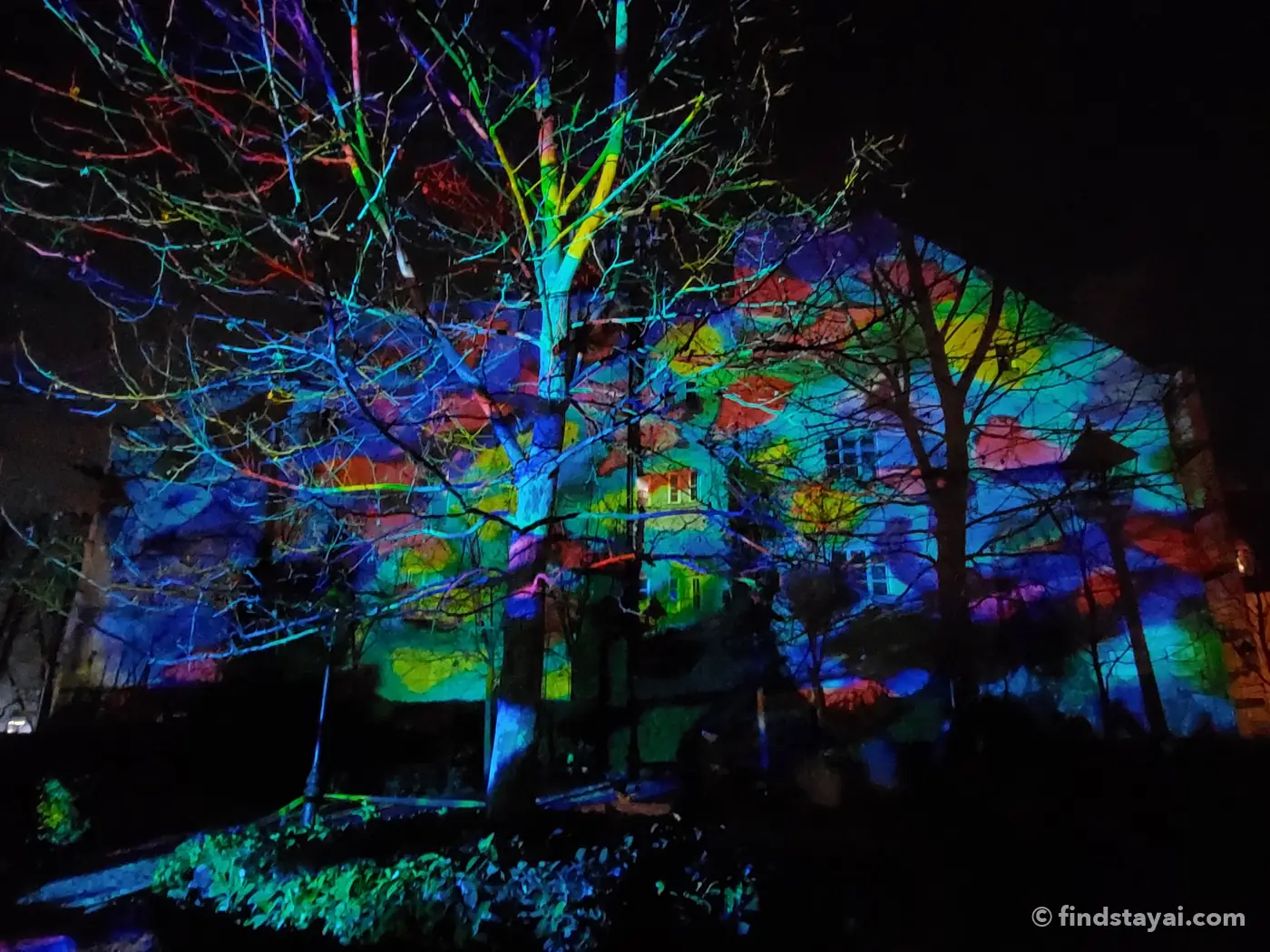
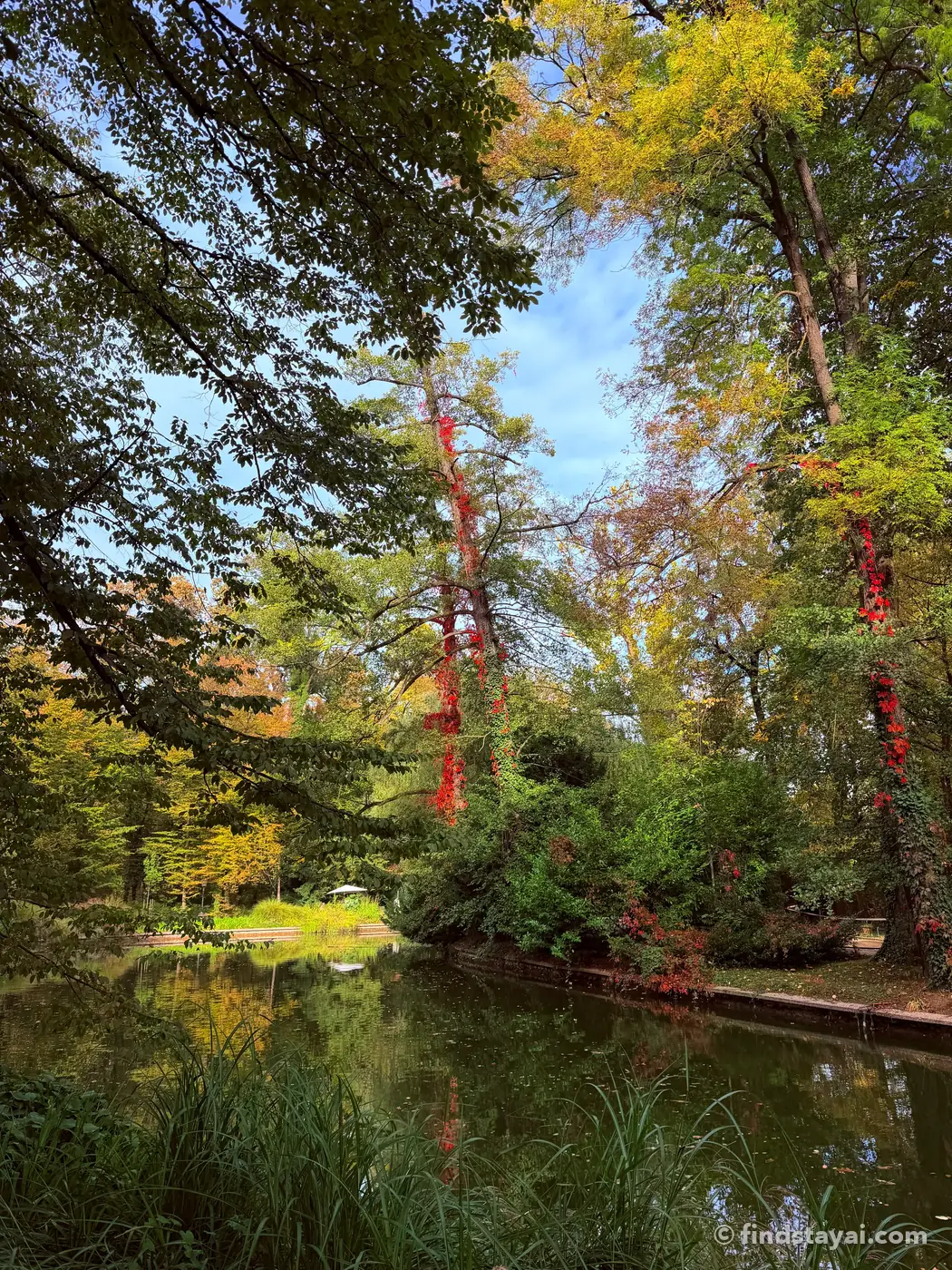
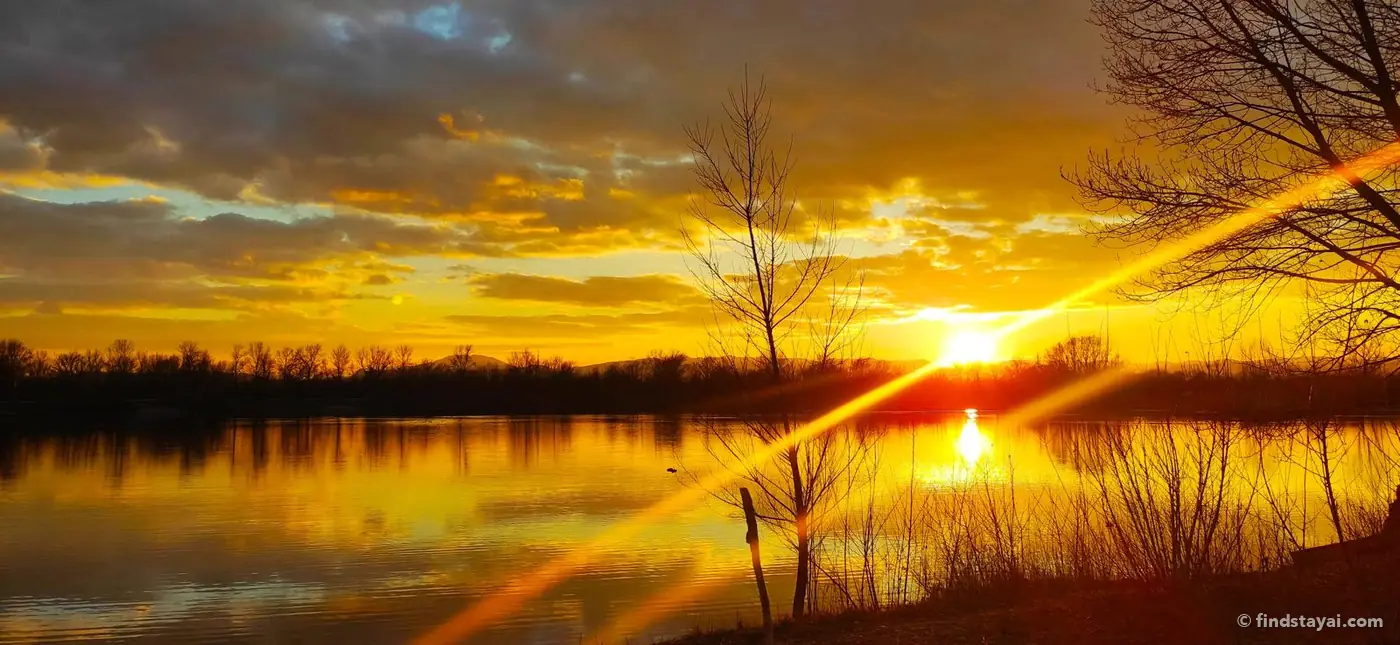
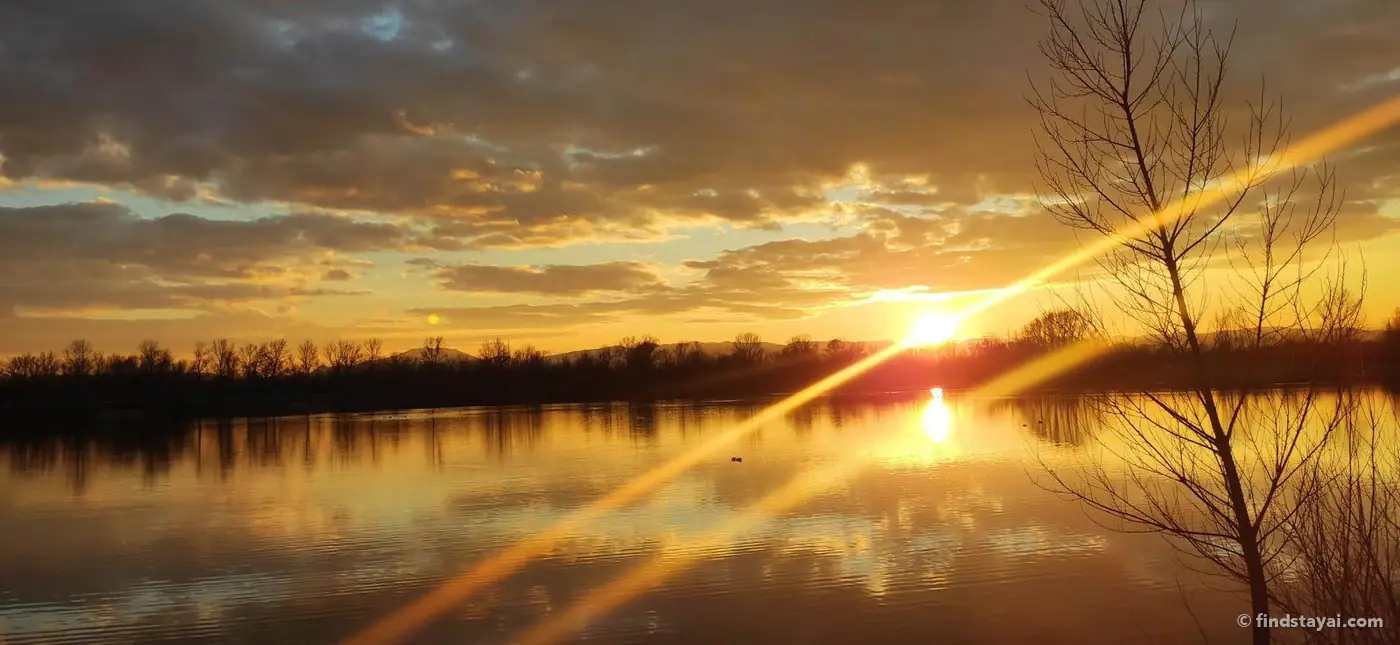
Our photos: Festival of Lights, Maksimir and Lake Zajarki
Tap a photo to see it larger.
Getting there and around
Franjo Tuđman Airport is about 17 km by road south-east of the centre. A shuttle bus runs to the main bus station, and city bus 290 runs to Kvaternikov trg, where trams continue into town. Check current times and fares with the operators. Trains arrive at the main station in the Lower Town, a short walk from Ban Jelačić Square. By car, Plitvice Lakes are about two to two and a half hours away, Rijeka about an hour and three-quarters, Zadar about three hours and Split about four.
The centre is best on foot. Trams run day and night on the main lines, and the short funicular links Ilica with the Upper Town. Medvednica can be reached by the Sljeme cable car, which runs from the north of the city. In December, leave the car at your stay: traffic and parking around the Advent locations are at their worst on weekend evenings.
When to go
December and early January bring Advent, cold weather, and sometimes snow. Pack warm layers, as evenings are often around freezing. Spring and autumn are ideal for walking and for Maksimir and Medvednica in colour. In March, the Festival of Lights fills the city with light installations (18 to 22 March in 2026; 2027 dates not yet announced). July and August are hot, and many locals head for the coast, so the city feels quieter. Compared with the coast, Zagreb has no real off season: the museums, markets and cafés stay open all year.
Good to know
- Most sights in the Upper and Lower Town are within walking distance, and blue trams cover the rest.
- The centre has paid parking zones and public garages, so a stay with its own parking is worth a lot.
- Advent runs from 28 November 2026 to 7 January 2027. December weekends book up first.
- Some buildings are still being repaired after the 2020 earthquake, so check opening times before you go.
Stays in Zagreb right now
Loading current offers…
Frequently asked questions
Is Zagreb worth visiting?
Yes, especially for a short city break or as the first stop before the coast. It combines a medieval Upper Town, 19th-century squares, good museums and a strong café culture, and hotels and apartments are usually cheaper than in Dubrovnik or Split in high summer.
How many days do you need in Zagreb?
Two days cover the Upper and Lower Town, Dolac and a museum or two. A third day lets you add Mirogoj, Maksimir and Medvednica or a trip to Samobor. In Advent, plan at least two evenings, as the locations are spread across the centre.
Is there a beach near Zagreb?
No, Zagreb is inland. In summer locals swim in Lake Jarun and Bundek. The nearest sea is on the Kvarner coast around Rijeka and Crikvenica, about an hour and a half to two hours by car.
Do I need a car in Zagreb?
Not for the city itself: walk or use the trams. A car helps for day trips to Plitvice, Zagorje or the coast. If you bring one, choose a stay with its own parking, because the centre has paid zones.
When is Advent in Zagreb in 2026?
From 28 November 2026 to 7 January 2027, according to the official Advent Zagreb site. European Best Destinations voted Zagreb the Best Christmas City Break in Europe for 2026.
Can I visit Zagreb Cathedral?
It reopened after years of repairs that followed the 2020 earthquake, but restoration continues, with the exterior next, so parts of the building may be under scaffolding. Check opening times before you go.
Find your stay in Zagreb
Describe what you need: dates, who's travelling, budget, which part of town. Our AI finds matching apartments, rooms and houses.
Start your search →Live availability and prices come from our booking partners. Numbers above are approximate and change with the season.