 HR
 DE
 FR
 IT
Split
Dalmatia's lively capital, built inside a 1,700-year-old Roman palace that never stopped being lived in — and the busiest ferry hub on the coast for hopping to the islands.
Search stays in SplitSplit's old town is Diocletian's Palace: a Roman emperor's retirement complex that turned into a living quarter of cafés, churches and apartments, with the palm-lined Riva along the water and the bell tower of St Domnius above it all. Walk up Marjan hill for the view and shaded trails right beside the centre.
For a city, it has beaches too — sandy, shallow Bačvice right by the centre, and clearer coves like Kašjuni under Marjan. But Split's real advantage is the port: catamarans and ferries leave from in front of the old town to Hvar, Brač (Zlatni Rat beach) and Vis, making it the best base for island-hopping.
Where to stay in Split
The Split riviera stretches from the Roman ruins of Solin and the fortress at Klis down past the city to the beach suburbs of Stobreč and Podstrana. Where you sleep decides whether your holiday feels urban, residential or resort-like.
Old Town and Varoš
Staying inside or right beside Diocletian's Palace puts you minutes from the Riva, the markets and the ferry port, which suits couples and short city breaks. Expect stone buildings, narrow lanes, steps and noise from bars on summer nights. Veli Varoš, the old quarter on the slope west of the centre, is calmer, with stone houses and alleys leading up towards Marjan. The palace itself is pedestrian-only, so parking is a real issue: look for a stay with a reserved space or plan to use a paid garage.
Bačvice and Firule
Just east of the old town, these neighbourhoods are built around Split's two sandy city beaches. Bačvice is the lively one: busy by day and the heart of the city's club and bar scene at night, so it suits younger travellers. Firule, a little further along, is more residential and a better fit for families with small children who want sand and shallow water a short walk away. The old town is roughly ten to fifteen minutes on foot, and street parking is zoned and paid.
Meje and Marjan
Meje runs along the southern foot of Marjan hill, between the forest park and the sea, and is one of Split's quietest and most sought-after residential areas. You are close to the clear-water coves under Marjan, such as Kašjuni and Ježinac, and to shaded walking and cycling paths in the park. The centre is about a twenty-minute walk. It suits couples and anyone who wants to be in the city without its noise; stays here tend to cost more than elsewhere.
Žnjan
Žnjan is a large, mostly modern neighbourhood on the eastern side of Split, stretching from its long city beach towards Stobreč. The waterfront has been rebuilt with sports courts, play areas and more room to spread out than the central beaches, so it works well for families and groups. Accommodation is generally better value than in the centre and parking is easier. The trade-off is distance: the old town is a bus ride or a longish walk away.
Stobreč and Podstrana
Stobreč, a former fishing village south-east of Split, sits on a sandy bay where the Žrnovnica river meets the sea, with shallow entry and courts and water-sports rental by the beach. Podstrana continues along the coast with around six kilometres of mostly pebble beach and a seafront promenade. Both feel like small resorts rather than a city, suit families and people with a car, and have regular buses into Split. Parking is far less stressful than in town.
Solin and Klis
Inland from the city, Solin was ancient Salona, capital of Roman Dalmatia, and its ruins are a short drive from Split. Above it, the fortress of Klis guards the pass into the hinterland and appeared as Meereen in Game of Thrones. Both are quieter and usually cheaper bases, often with private parking, but they are not beach locations. They suit drivers and travellers who value space and price over a sea view and don't mind a short drive to swim.
Beaches
Bačvice
A small sandy bay a short walk east of the palace, with very shallow water that stays warm. It is the home of picigin, the local game of keeping a small ball in the air while splashing through the shallows. Expect crowds, cafés and showers, and little natural shade.
Firule
The next bay east of Bačvice, with fine sand and a sheltered position that makes it popular with parents of young children. It is more compact and generally calmer than Bačvice, with cafés close by. You can walk here from the old town along the seafront in about a quarter of an hour.
Kašjuni
A wide bay of small pebbles on the south-western side of Marjan, below wooded slopes, known for the clearest water in the city. There is a café and changing cabins, a separate section where dogs are allowed and a marked naturist area. Most people come by car, taxi or bus rather than on foot.
Žnjan
Split's long eastern beach has been redeveloped with sports courts, a skate park, an aquapark and an amphitheatre, plus accessible entry for wheelchair users. It offers much more space than the central coves, which makes it practical for families on busy summer days. Reach it by city bus, car or a long walk along the coast.
Podstrana seafront
South of Split, Podstrana's coastline is groomed into an almost continuous pebble and gravel beach of around six kilometres, backed by a promenade. Entry is generally easy and there is plenty of room to find a quieter patch. It is best if you are staying locally or have a car; buses also run from Split.
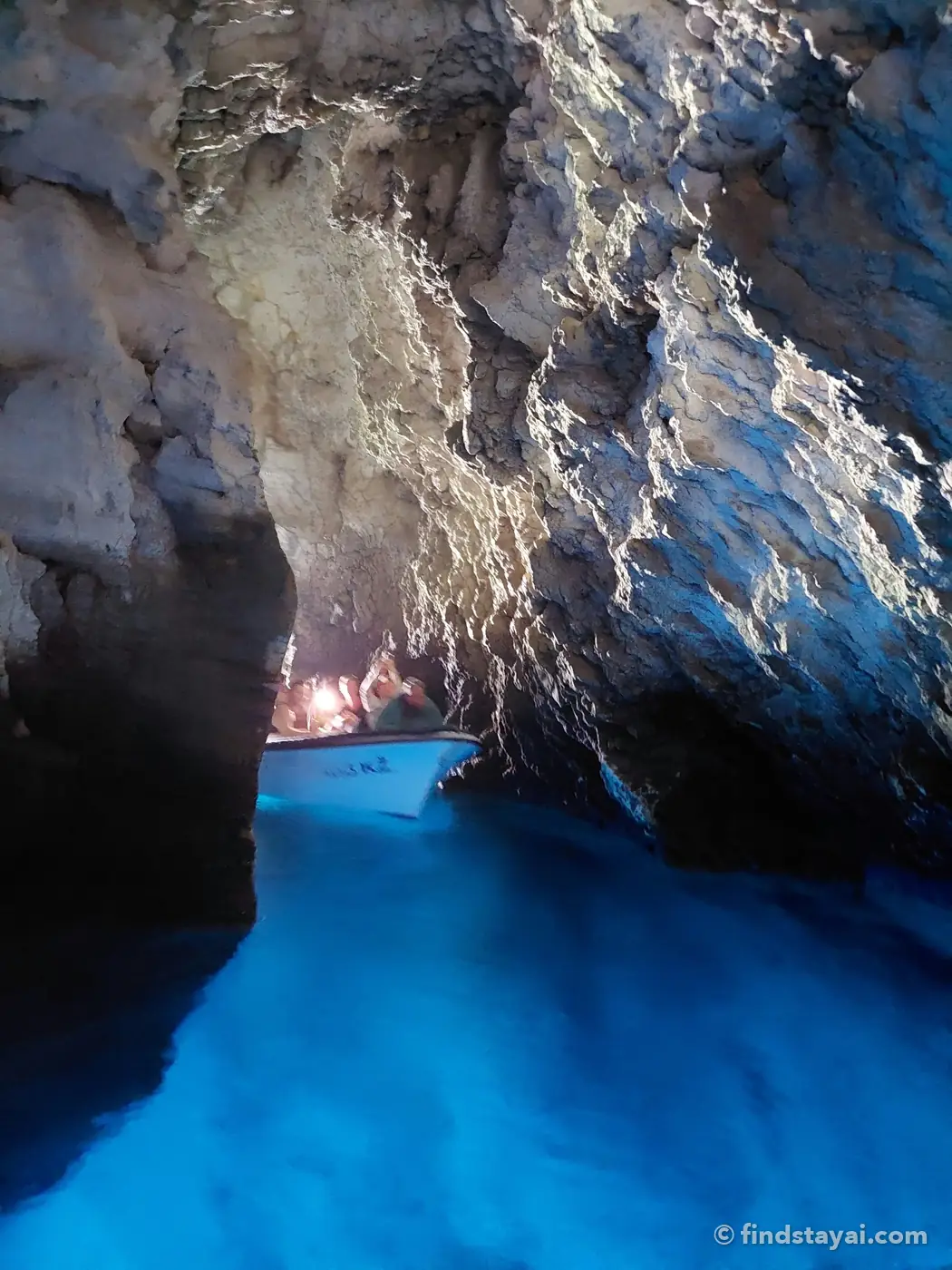
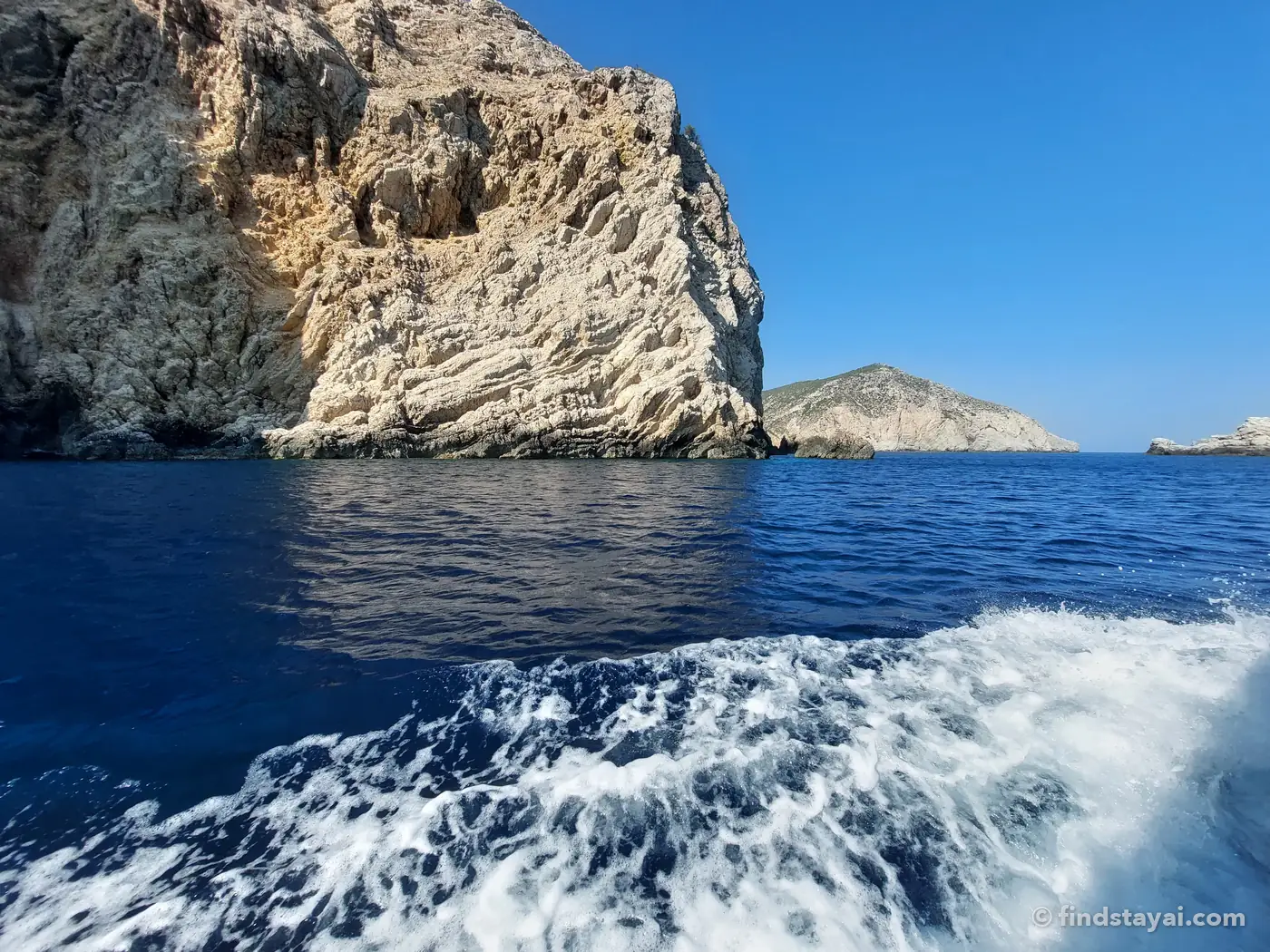
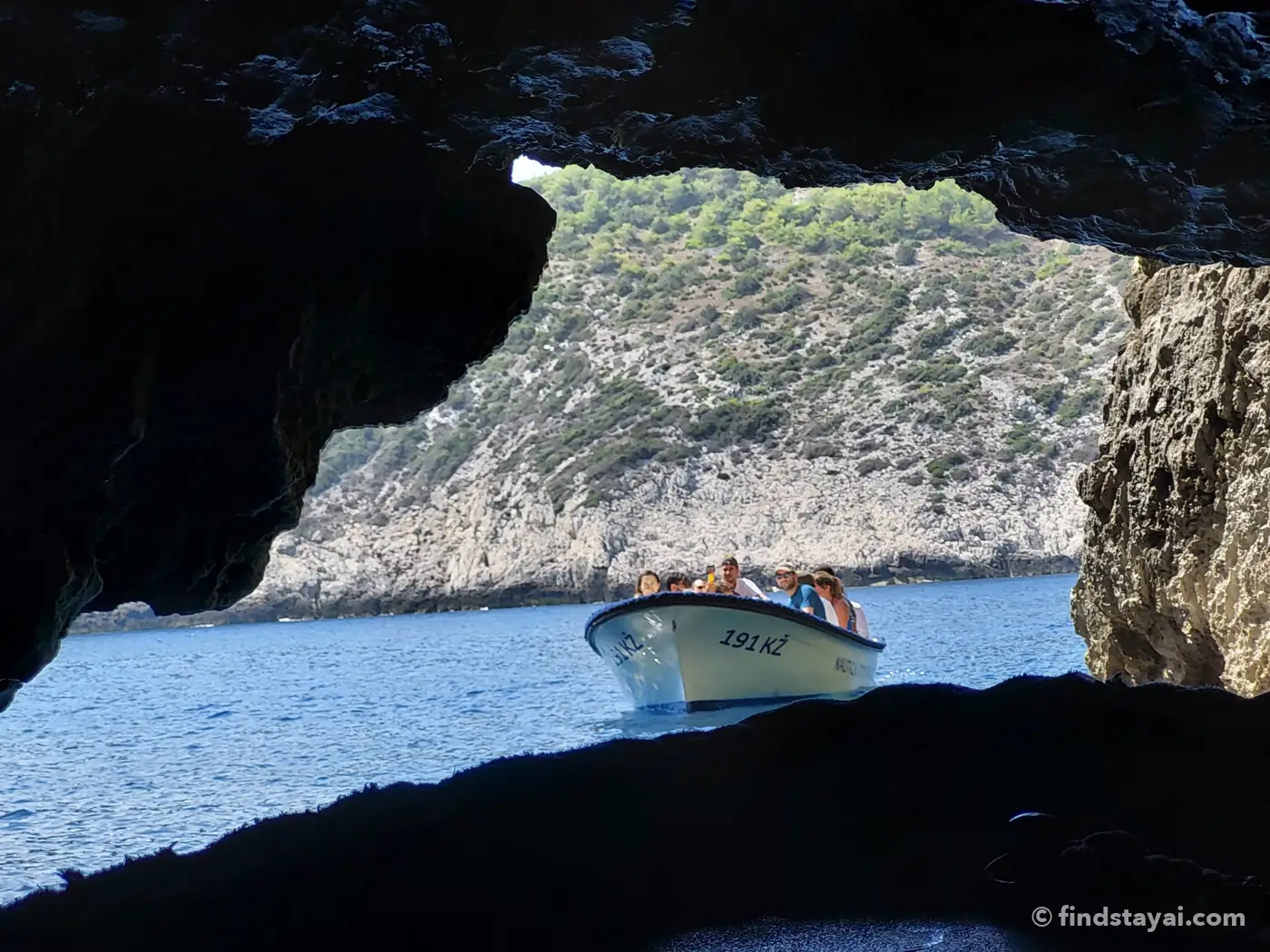
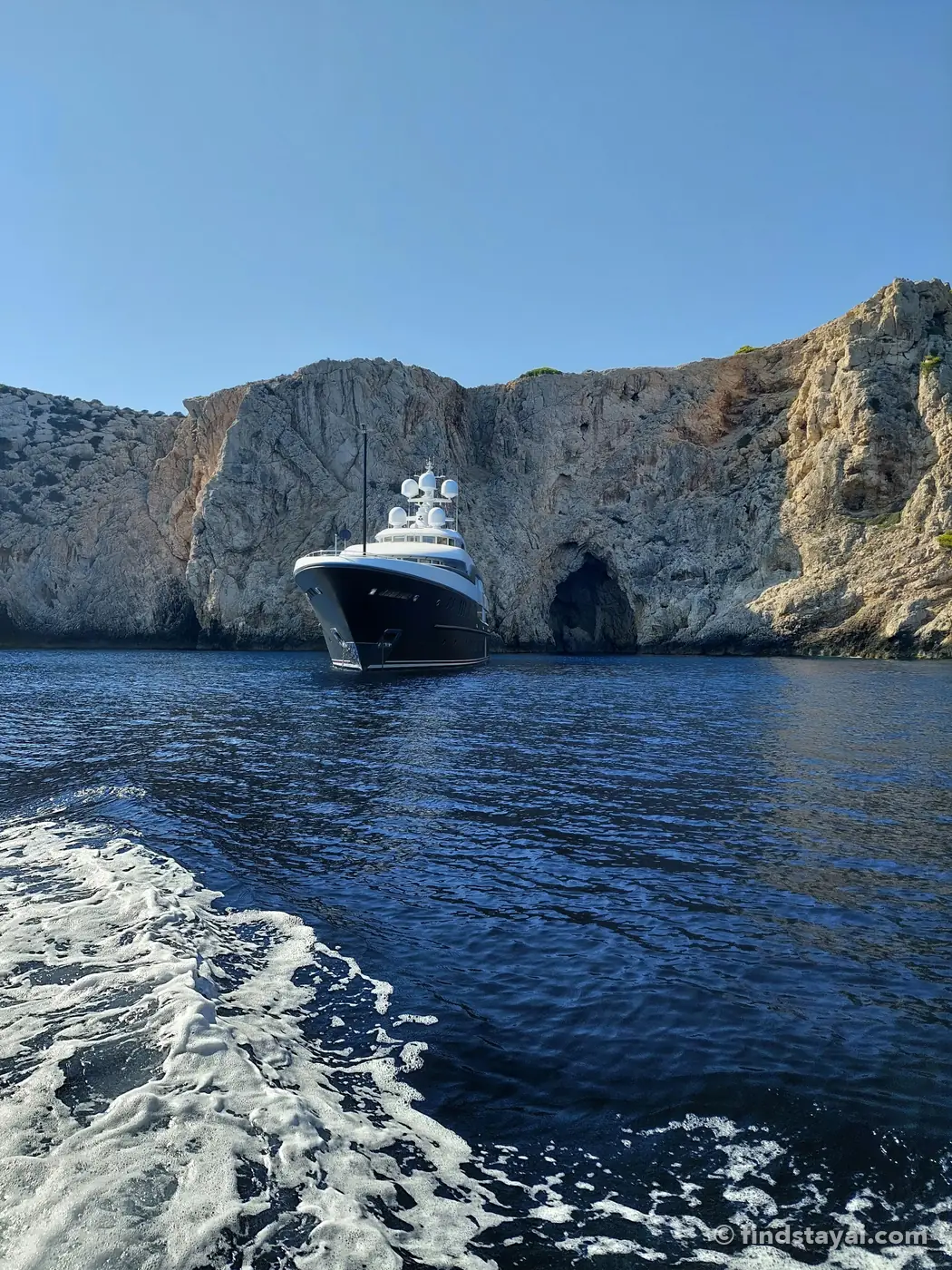
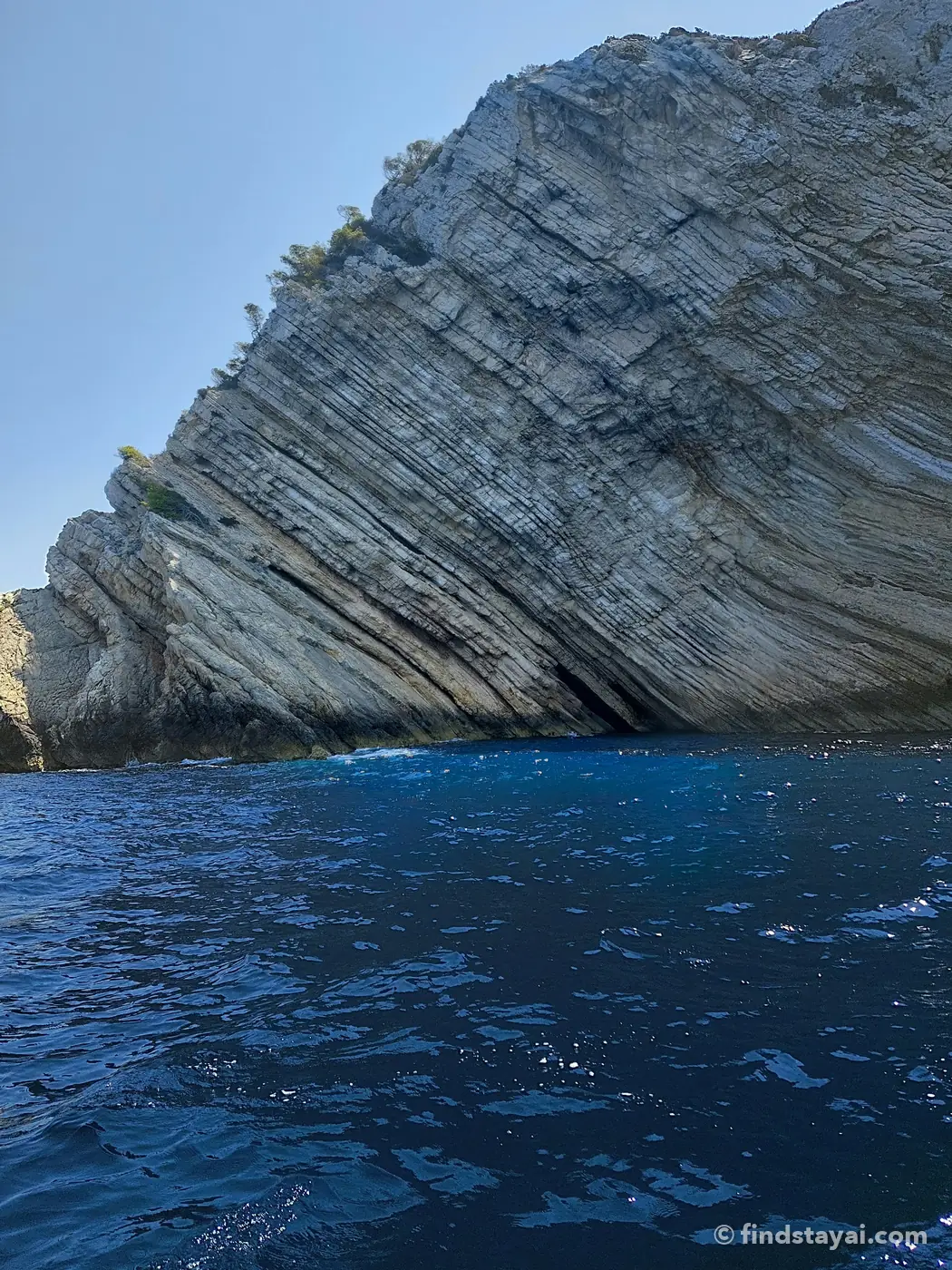
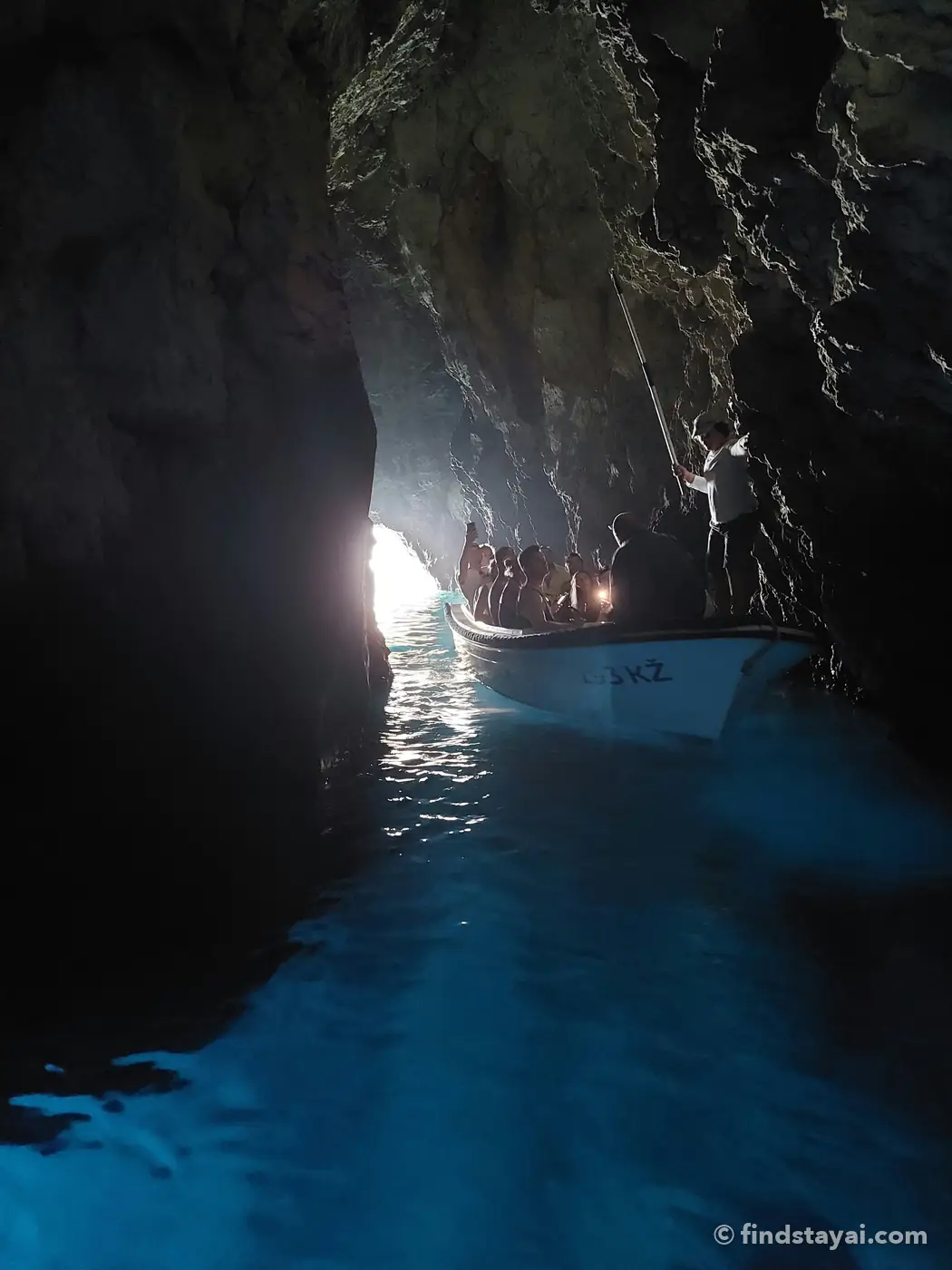
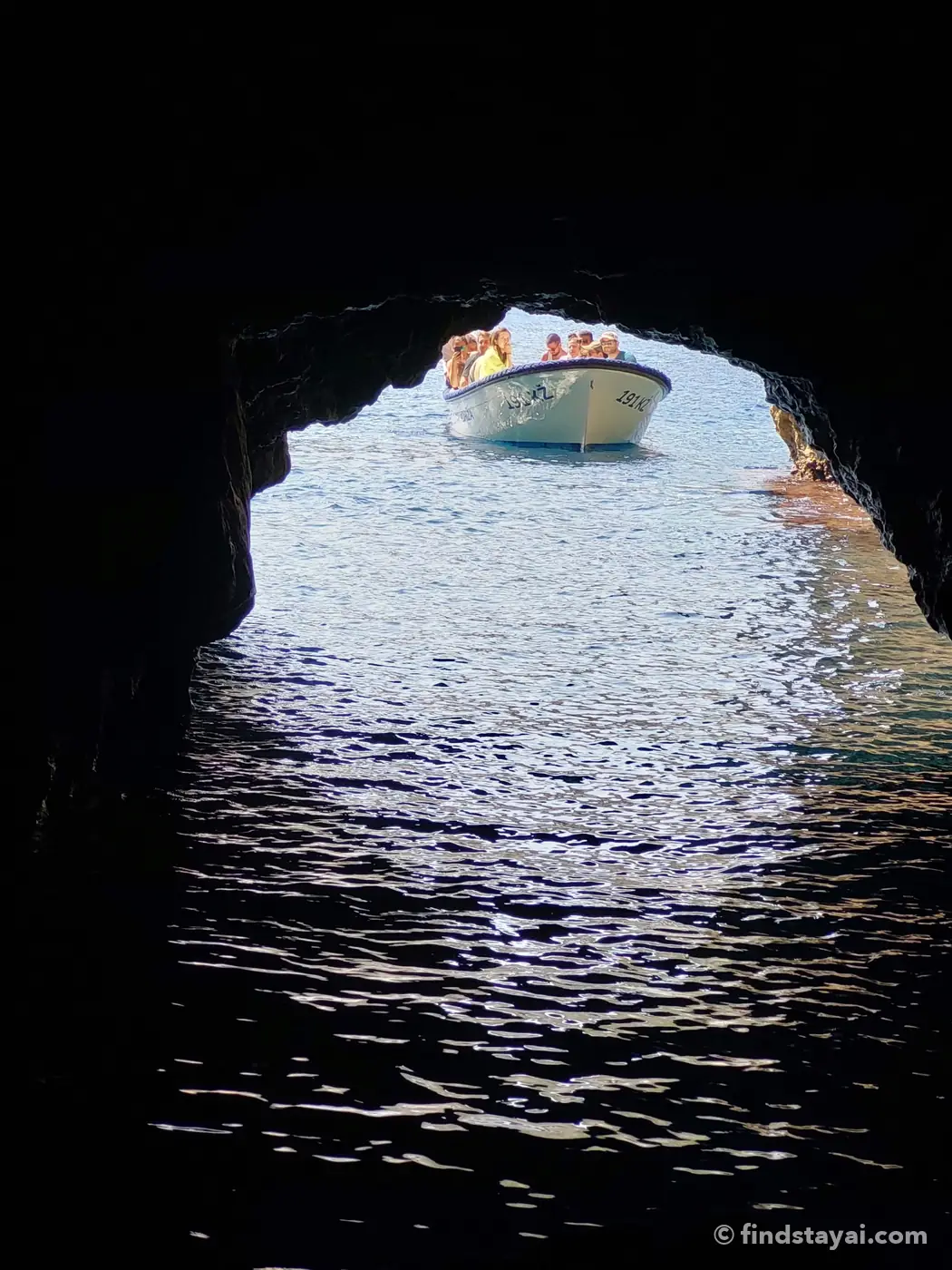
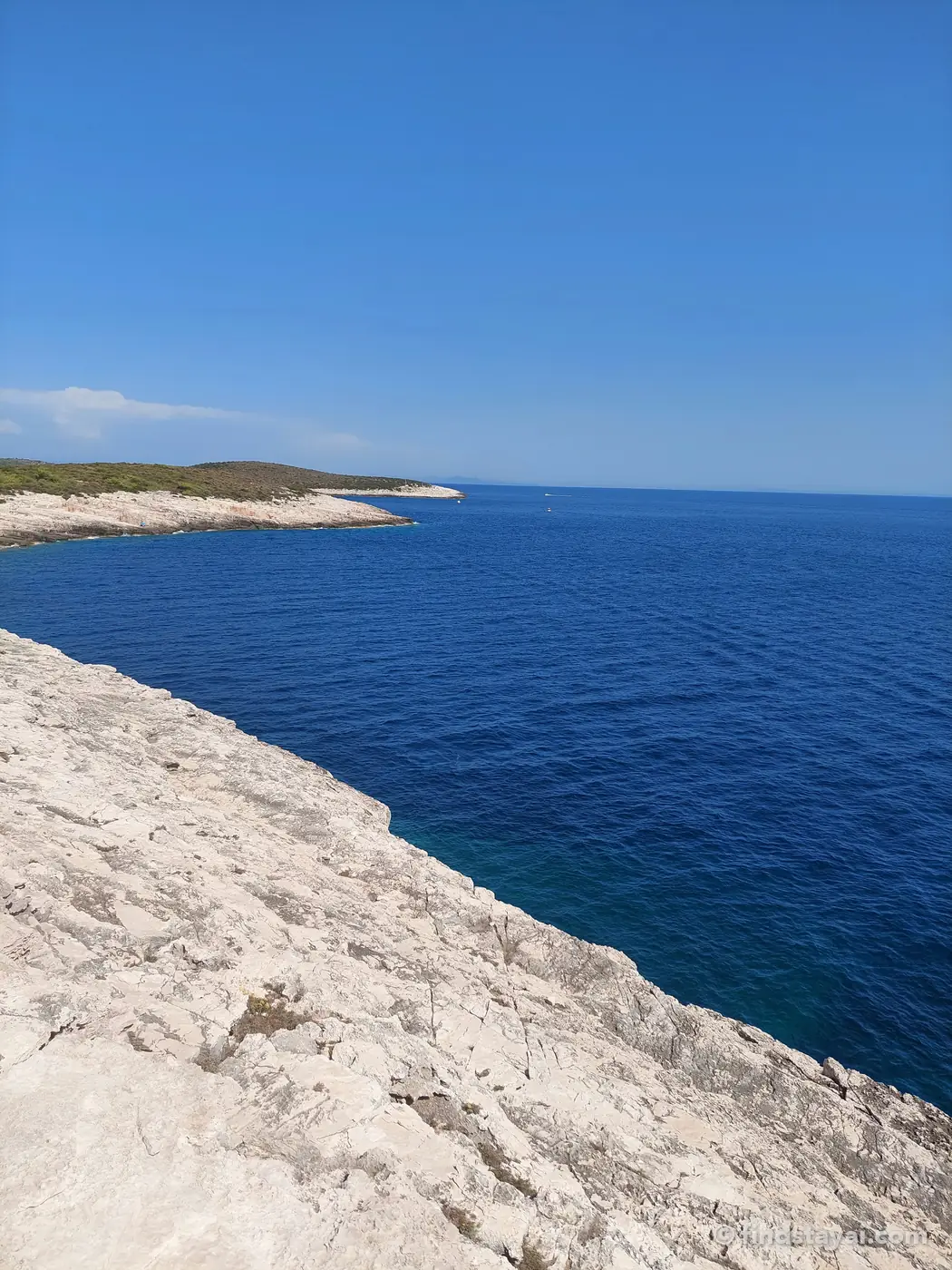
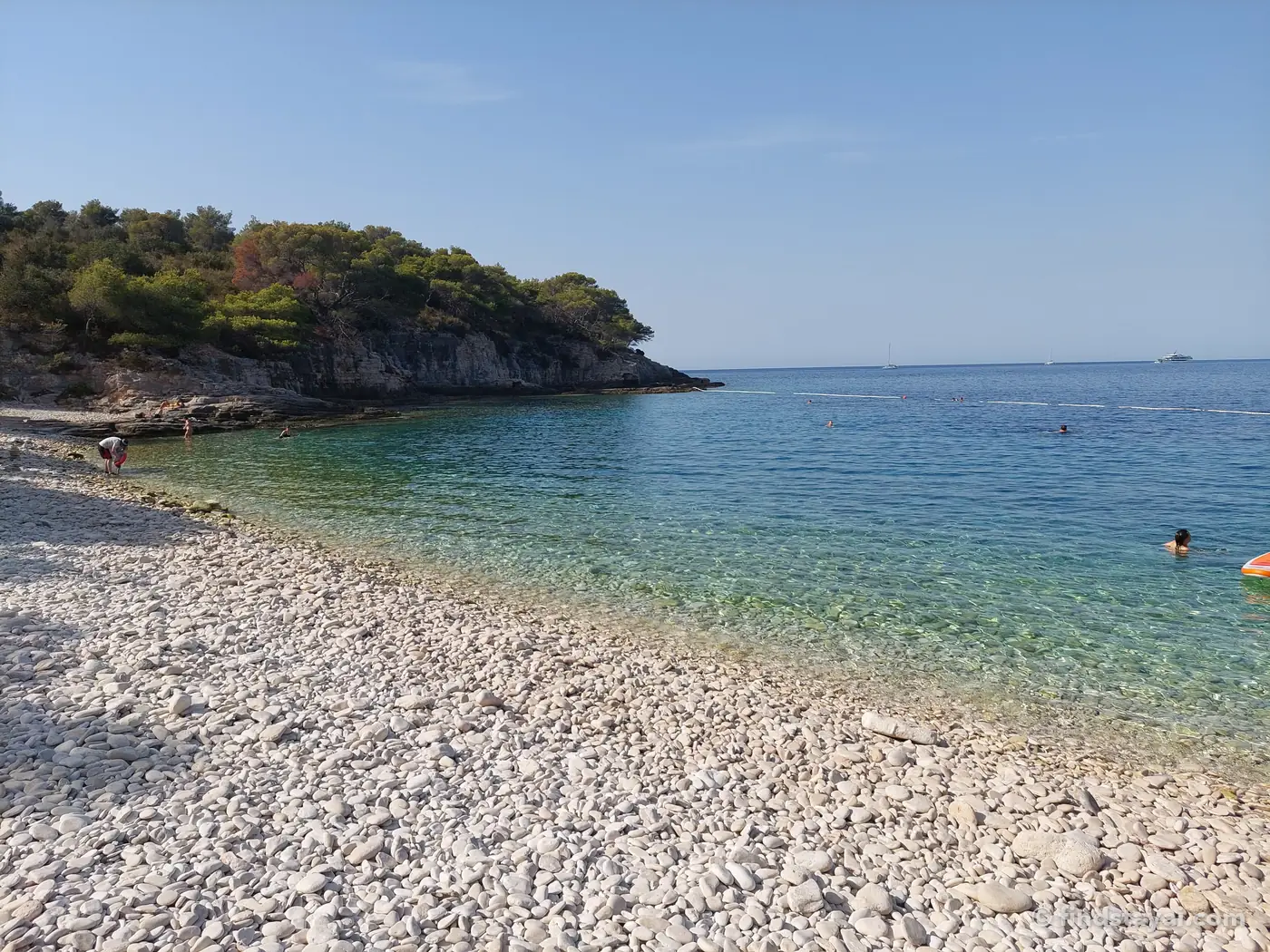
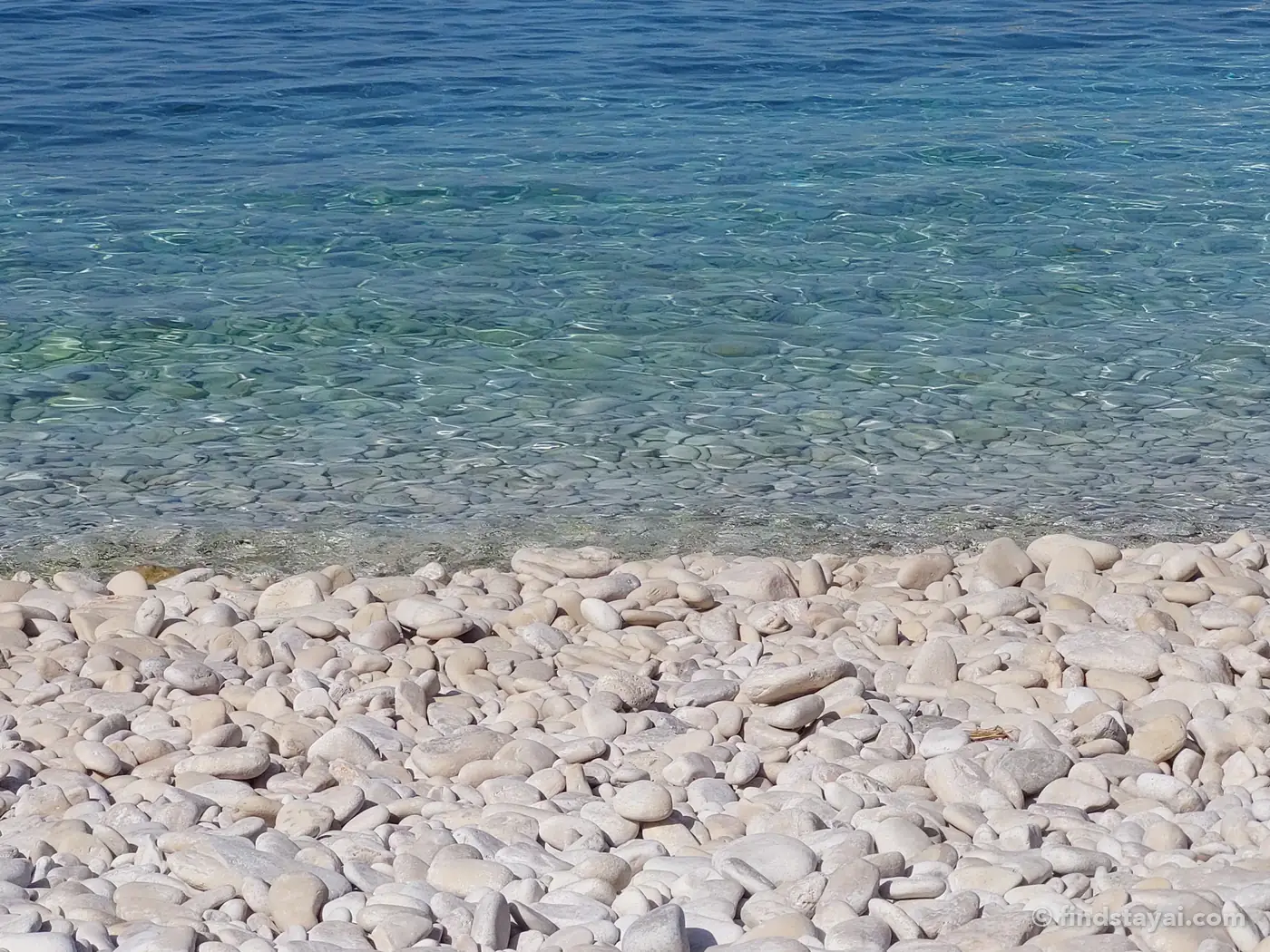
Our photos: Vis and Biševo
Vis is a little over two hours from Split by car ferry, faster by catamaran. Taken by our team on the coast. Tap a photo to open it larger.
Getting there and around
Split Airport lies in Kaštela, roughly 20 kilometres west of the city, and the drive into the centre usually takes 30 to 45 minutes depending on traffic. City bus line 37 links the airport with Split but is slower, and taxis and pre-booked transfers are widely available. By road, Split is on the A1 motorway from Zagreb. The main bus station, railway station and ferry port sit side by side on the harbour, a few minutes' walk from the palace, with ferries and catamarans to Brač, Hvar, Vis and beyond.
Inside the city, walking covers the old town, Varoš, Bačvice and Firule. Local buses serve Žnjan, Marjan's beaches, Stobreč, Podstrana, Solin and Klis. Parking is the hard part: the palace is pedestrian-only, street parking is split into colour-coded paid zones, and central spaces fill quickly in summer. There is a paid car park by the ferry port and stations. If you are driving, a stay with its own parking space, or one in a suburb, will save you time every day.
When to go
July and August are the peak months: hot, busy and at their liveliest, with the sea usually around 24 to 25°C. The Split Summer Festival fills the palace and other historic spaces with opera, theatre and concerts from mid-July to mid-August, and the Ultra Europe electronic music festival usually takes place in July, when accommodation fills up fast. June and September are the most comfortable months for most visitors, with warm water, fewer crowds and a full ferry schedule. May and October are pleasant for sightseeing but cooler for swimming. From November to March Split stays a working city, but beach bars close, catamaran timetables shrink and the sea drops to the mid-teens or below.
Good to know
- Bačvice is a rare sandy, shallow city beach; Kašjuni under Marjan has clearer water.
- It's the coast's main ferry hub — day trips to Hvar, Brač and Vis leave from the old-town port.
- Driving and parking in the centre is hard; pick a stay with a parking spot or stay just outside.
- May, June and September are easiest for weather, ferries and crowds.
Where people stay
Popular spots in and around Split:
Find the right kind of stay
Smaller places around Split
Stays in Split right now
Loading current offers…
Frequently asked questions
Does Split have sandy beaches?
Yes, which is unusual for Dalmatia. Bačvice and Firule, both just east of the old town, are sandy and shallow, so they are good for children and for playing picigin. Stobreč, a little further south-east, also has a sandy bay. Most other beaches around Split, including Kašjuni under Marjan and the long seafront at Podstrana, are pebble, so water shoes are useful.
Is it better to stay in Split old town or outside?
It depends on how you are travelling. The old town and Varoš are ideal without a car, for short stays and for catching early ferries, but they are noisier and parking is scarce. If you have a car, children or want more space for the money, Žnjan, Stobreč or Podstrana are more relaxed and have easier parking, with buses into the centre.
How do I get from Split Airport to the city centre?
The airport is in Kaštela, about 20 kilometres from the centre. A taxi or pre-booked transfer takes roughly half an hour to 45 minutes depending on traffic. The cheaper option is city bus line 37, which runs frequently through the day but takes closer to an hour. Check current airport shuttle services before you travel, as operators change.
Can I do island day trips from Split?
Yes, Split is the main ferry hub for central Dalmatia. Car ferries and faster catamarans leave from the harbour next to the old town for Brač, Hvar, Šolta and Vis, and many boat tours run from the Riva in summer. Timetables are fullest from June to September; book catamaran tickets ahead in peak season.
Where can I park in Split?
Not in the old town, which is pedestrian-only. Street parking in and around the centre is divided into colour-coded paid zones, with the most expensive and shortest-stay zones closest to the palace. There is a public car park by the ferry port and stations. Outside the centre, in areas such as Žnjan, Stobreč and Podstrana, parking is much easier, and many private stays include a space.
What is there to see near Split?
Solin, a few kilometres inland, has the extensive ruins of Salona, once the capital of Roman Dalmatia and the birthplace of Diocletian. Klis Fortress, around a 20-minute drive away, has sweeping views and was a Game of Thrones filming location. Marjan hill, right beside the city, is a forest park with walking trails and viewpoints.
Find your stay in Split
Describe what you need — dates, who's travelling, budget, how close to the beach — and our AI finds matching apartments, rooms and houses.
Start your search →Live availability and prices come from our booking partners. Numbers above are approximate and change with the season.