 HR
 DE
 FR
 IT
Korčula island: beaches, towns and places to stay
A long green island of pine forest, vineyards and stone villages: a walled medieval town on a tiny peninsula, sword dances on summer evenings, Pošip and Grk white wines, and the island's sandy beaches around Lumbarda, twenty minutes by ferry from Pelješac.
Search stays on KorčulaKorčula is about 47 km long and 5 to 8 km wide, the sixth largest island in the Adriatic, with Klupca (568 m) as its highest point. It lies just off the Pelješac peninsula, separated from it by a strait little more than a kilometre wide at its narrowest. Nearly 15,000 people live on the island (14,594 in the 2021 census), in the town of Korčula, in Vela Luka and Blato in the west, and in villages such as Lumbarda, Smokvica, Čara, Pupnat and Račišće. The Greeks called it Black Korčula, Korkyra Melaina, for the dark pine and holm oak forests that still cover much of it.
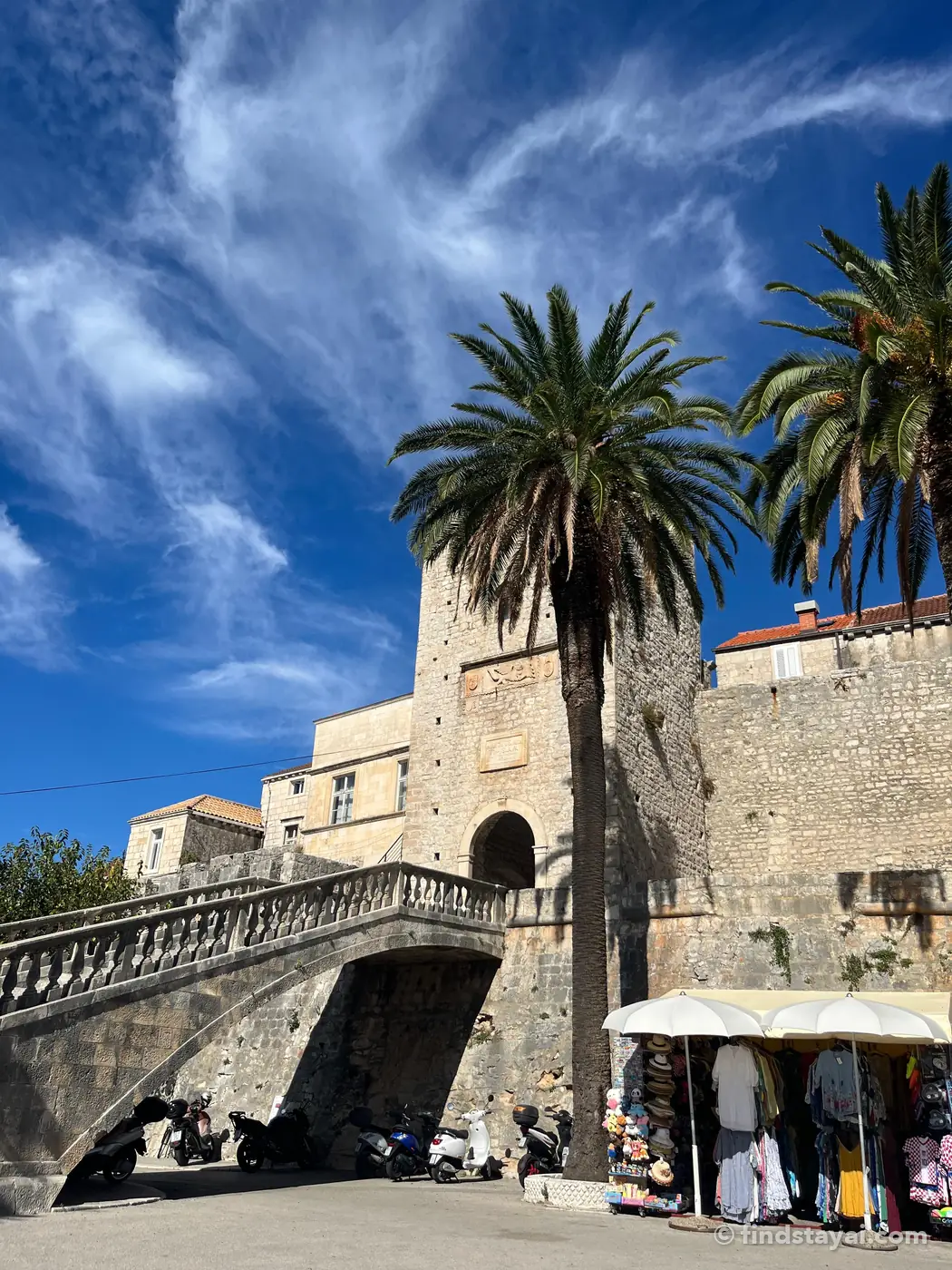
Korčula town, on the north-east tip, is one of the best-preserved medieval towns on the Adriatic. Its streets branch off a single main street like the bones of a fish, laid out so that the breeze from the sea runs through the town. You enter through the Land Gate under the Veliki Revelin tower and climb to St Mark's Cathedral on the highest point. The town's statute dates from 1214, and local tradition makes Korčula the home of Marco Polo, a claim historians still argue about. On summer evenings the Moreška, a sword dance between a white and a black king fighting over a girl, is performed for visitors.
Lumbarda, 6 km east of town, is where the sand is. Its vineyards grow Grk, a white wine made almost only here, and a Greek stone inscription from the 4th or 3rd century BC, the Psephisma of Lumbarda, was found in its fields; the original is in the Archaeological Museum in Zagreb and a copy in the town museum in Korčula. Opposite Korčula town lie the small islands of Badija, with a 14th-century Franciscan monastery, and Vrnik, an old stonemasons' island whose quarries supplied stone for buildings around the Adriatic.
The middle of the island is wine country. Čara and Smokvica are the home of Pošip, the island's best-known white, and below them Zavalatica and Brna are quiet bays on the south coast. Pupnat sits about 360 m above sea level, above Pupnatska Luka, often named the most beautiful beach on Korčula. Žrnovo, just inland from the town, is known for its hand-made pasta, žrnovski makaruni.
In the west, Blato is a large village built around a long avenue of lime trees, and Vela Luka is a harbour town at the end of a deep bay, with the ferry to Split, the Vela Spila cave and boats to the islet of Proizd. Stay in Korčula town for history and connections, in Lumbarda for sandy beaches and wine, along the south coast for quiet coves, and in Vela Luka if you come by ferry from Split or want Proizd on your doorstep.
Beaches
Vela Pržina (Lumbarda)
The largest sandy beach on Korčula, south of Lumbarda village: a crescent of sand in a bay with shallow water, a beach bar and restaurant in season, and sunbeds and umbrellas to rent. Very good with small children. There is little natural shade, and in July and August the small car park fills by mid-morning.
Bilin Žal (Lumbarda)
A smaller beach on the eastern side of Lumbarda, a strip of sand between pebbles and flat rocks, looking across the channel to Pelješac. Quieter than Vela Pržina, with a café and grill restaurant by the beach. The rocky Ražnjić peninsula nearby is good for snorkelling under the pines.
Badija
The largest of the small islands off Korčula town, reached by taxi boat from the town's eastern harbour in about 15 minutes in summer. A path runs around the island past pebble and rock coves, and the 14th-century Franciscan monastery stands by the landing. Bring water and food if you plan to stay all day.
Banje and the town beaches
Banje is the town beach of Korčula, a few minutes' walk east of the old town, with pebbles, a café and a view back towards the old town. It is convenient but busy. If you are staying in town without a car, the hotel beaches along the coast and the taxi boats to Badija are the easy alternatives.
Žrnovska Banja
A pebble bay on the north coast about 4.5 km west of Korčula town, with a campsite and a café. The water is calm and the entry gentle, which makes it a good family choice close to town. Medvinjak, about 1 km from town, and Tri Žala are similar small pebble coves along the same coast.
Pupnatska Luka
Often called the most beautiful beach on the island: a wide bay of fine white pebbles and very clear water on the south coast below the village of Pupnat. A narrow, winding road leads down to it and parking is limited, so come early in high season. Two or three café bars and sunbed rental at the back of the beach.
Bačva
A small, deep cove of pebbles and shingle on the south coast below Žrnovo and Pupnat, with a konoba serving grilled fish. The access road is steep and narrow and many people arrive by boat. Natural, with very few facilities.
Rasohatica, Pavja Luka and Orlanduša
A string of pebble coves on the south coast below Žrnovo, roughly 8 to 10 km from Korčula town, reached by car or on foot over gravel roads. Quiet even in August, with pine shade and almost no facilities, apart from a restaurant at Pavja Luka. A small car copes better with the tracks.
Vaja and Samograd (Račišće)
Two white pebble beaches on the north coast just west of the fishing village of Račišće, about 12 km from Korčula town. The road to them is partly unpaved. Clear, often calm water and a view across the channel to Pelješac; bring your own shade and drinks.
Žitna and Zavalatica
Zavalatica, below Čara, was once the island's wine port and is now a small resort with private rooms. Žitna is a narrow bay a few hundred metres away on foot, with fine pebbles, pine forest around it and a gently sloping seabed, a good choice for families. Čavića Luka nearby is another pebble cove.
Brna, Istruga and Prižba
On the south coast below Smokvica, Brna is a deep, sheltered bay with pebble beaches under the pines, and the neighbouring bay of Istruga is known for its healing mud and shallow water. Further west, below Blato, Prižba has pebble beaches, a scatter of small islets and two little peninsulas, with cafés and space for children.
Proizd (Vela Luka)
An islet at the entrance to the bay of Vela Luka, reached by taxi boat from the Vela Luka waterfront in about 30 minutes in summer. It has several beaches of white pebbles and smooth sloping stone slabs over turquoise water, footpaths between them and one restaurant by the jetty, so bring supplies. Part of the island is used by naturists.
Our photos: Korčula town and its bays
Taken by our team on the coast. Tap a photo to open it larger.
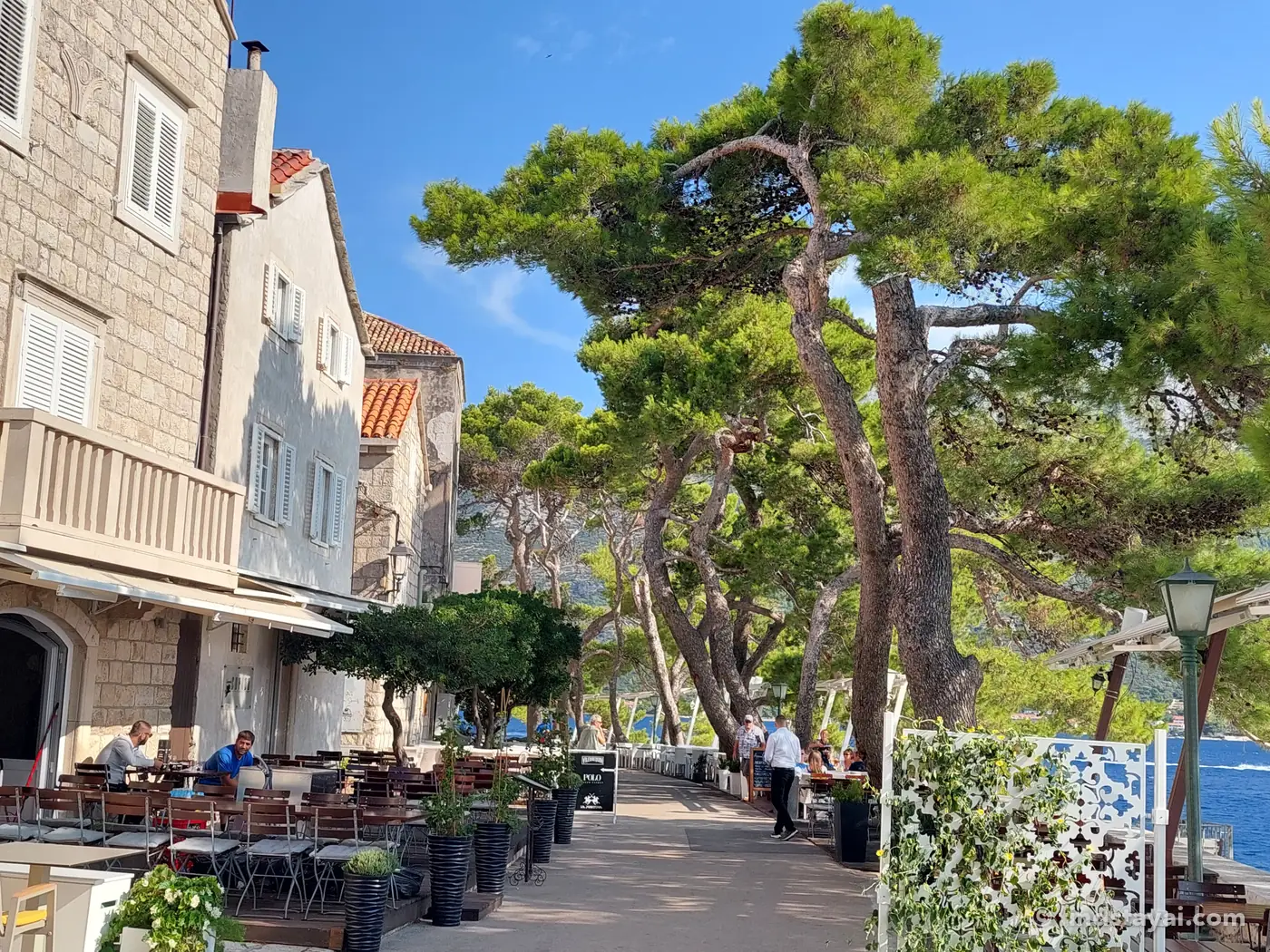
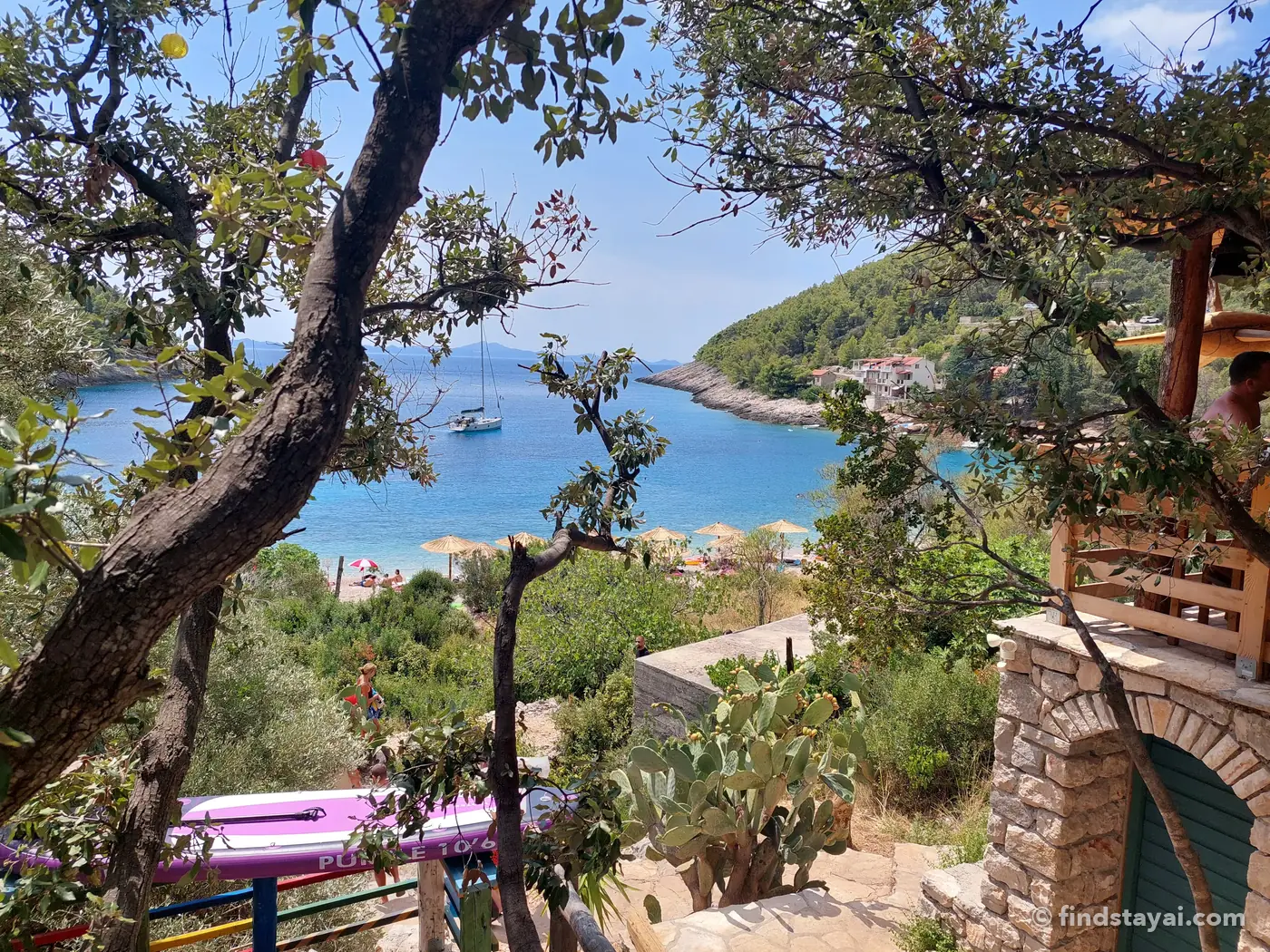
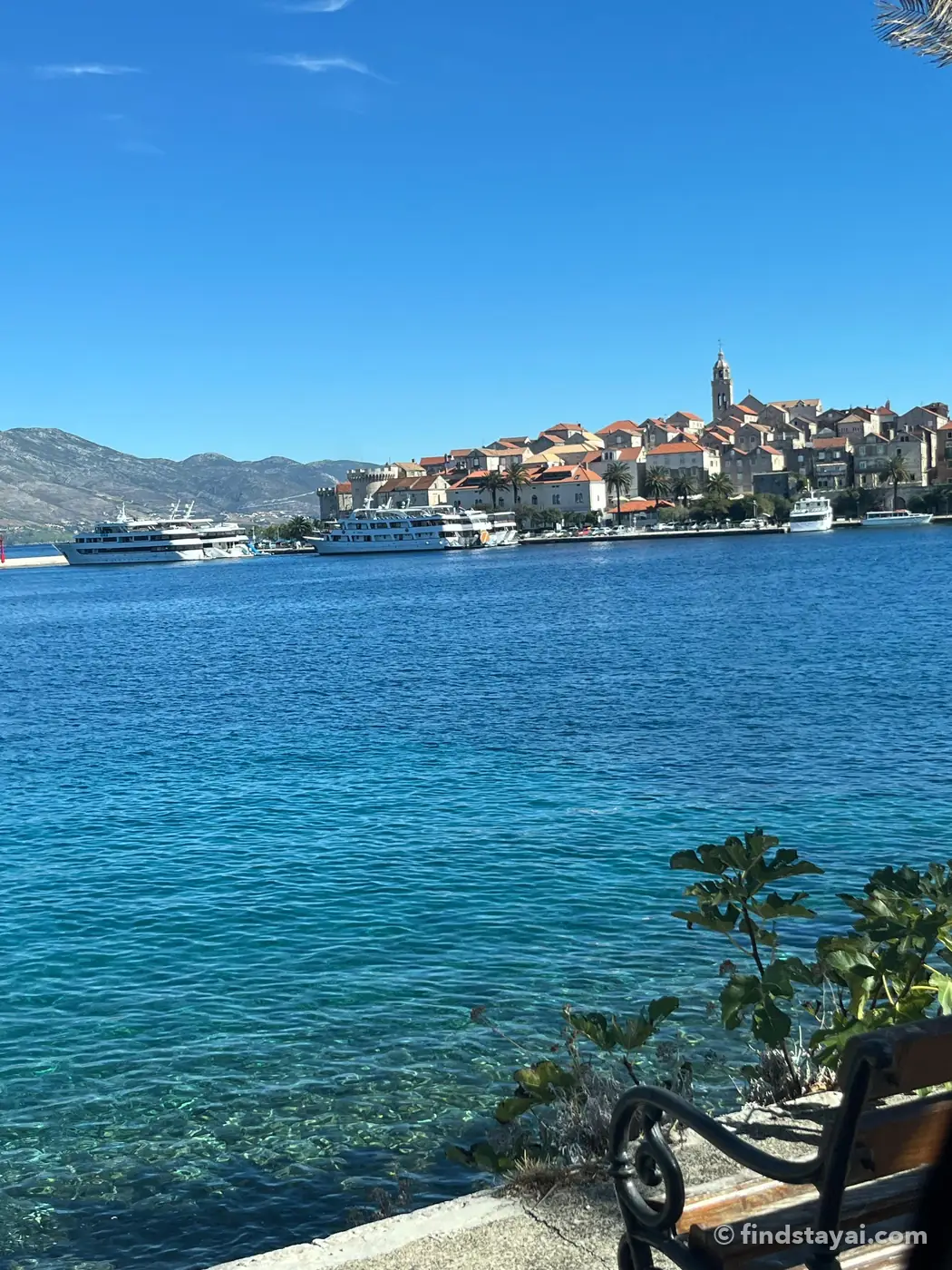
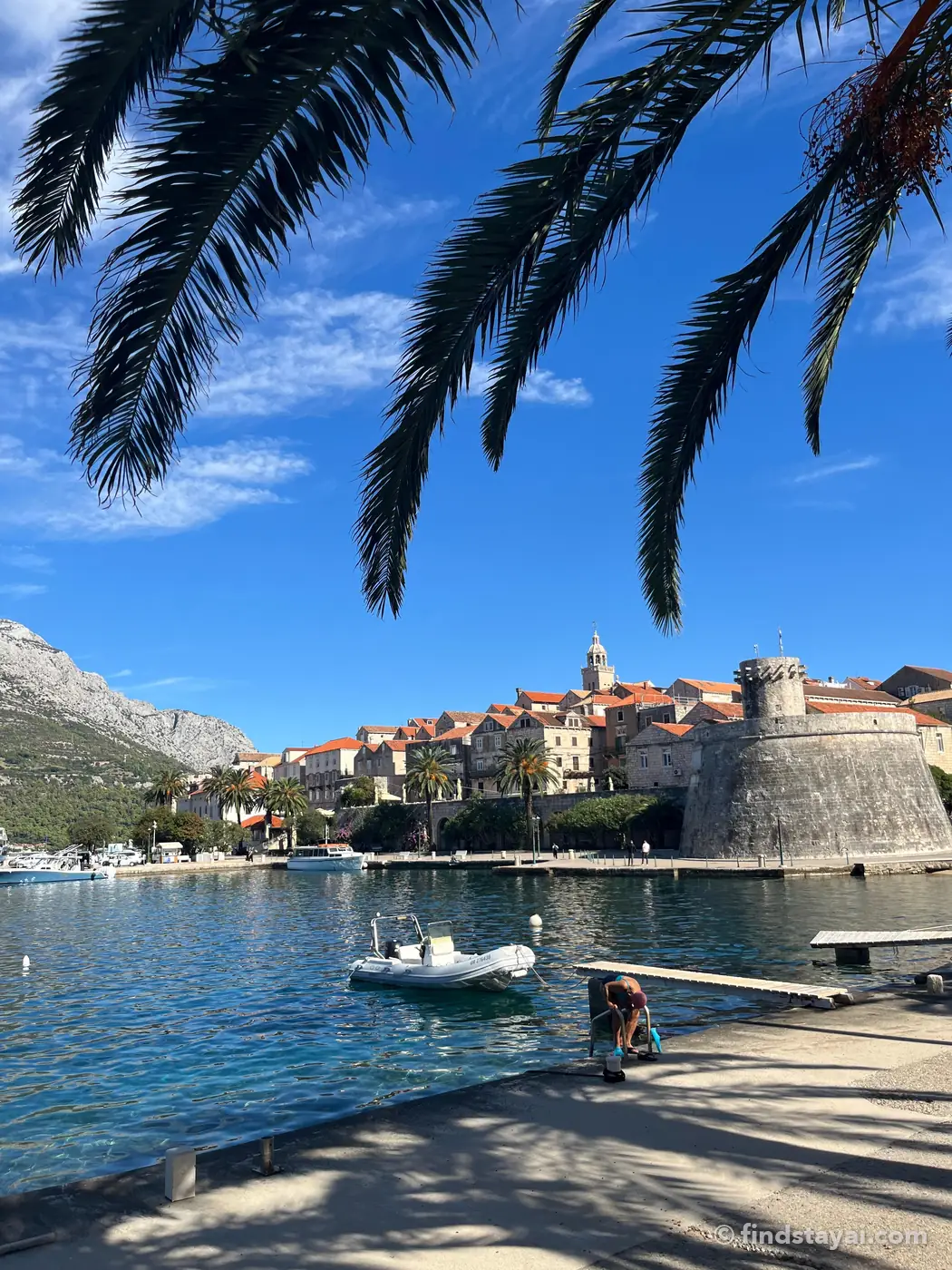
Korčula island map: beaches and sights
Old forts and churches, beaches, viewpoints and nature, with how to get there and how long a visit takes. Tap a pin or a place in the list.
- 1
Katedrala sv. Marka i stari grad
HeritageSt Mark's Cathedral at the top of the old town, whose streets branch off the main street like a fishbone.
- 2
Kopnena vrata i kula Veliki Revelin
HeritageThe Land Gate and the Veliki Revelin tower, the main entrance to the old town, with a permanent Moreška exhibition.
- 3
Gradski muzej Korčula
HeritageTown museum in a Renaissance palace on St Mark's Square, with a copy of the Greek Psephisma of Lumbarda.
- 4
Plaža Banje
BeachesThe town beach, pebbles and a café, a few minutes' walk east of the old town.
- 5
Otok Badija i franjevački samostan
NatureThe largest islet off the town, with a 14th-century Franciscan monastery, a path around the island and pebble coves.
- 6
Otočić Vrnik i stari kamenolomi
HeritageA small stonemasons' island with old quarries whose stone was shipped around the Adriatic.
- 7
Vela Pržina
BeachesThe largest sandy beach on the island, shallow and good with small children; beach bar in season.
- 8
Bilin Žal
BeachesA strip of sand between pebbles and flat rocks, quieter than Vela Pržina, with a café and grill.
- 9
Žrnovska Banja
BeachesCalm pebble bay with gentle entry and a campsite, a good family beach close to town.
- 10
Rasohatica i Pavja luka
BeachesQuiet pebble coves on the south coast in pine shade, reached over gravel roads; restaurant at Pavja Luka.
- 11
Bačva
BeachesSmall, deep pebble cove with a konoba grilling fish; steep, narrow access road.
- 12
Pupnatska luka
BeachesWide bay of fine white pebbles and very clear water, often called the island's most beautiful beach.
- 13
Vaja i Samograd
BeachesTwo white pebble beaches west of the fishing village of Račišće, looking across to Pelješac.
- 14
Žitna i Zavalatica
BeachesA narrow bay of fine pebbles in pine forest with a gently sloping seabed, a short walk from Zavalatica.
- 15
Čara i Smokvica – vinogradi pošipa
HeritageTwo inland villages surrounded by the vineyards of Pošip, the island's best-known white wine; family wineries offer tastings.
- 16
Brna i Istruga
BeachesA deep, sheltered bay with pebble beaches under pines; neighbouring Istruga is known for healing mud and shallow water.
- 17
Blato – drvored lipa
HeritageA large old village on three hills, with a long avenue of lime trees along its main street.
- 18
Prižba
BeachesPebble beaches between small islets and two little peninsulas, with cafés and room for children.
- 19
Vela spila
HeritagePrehistoric cave above Vela Luka with traces of life since the last ice age; the terrace in front is a fine viewpoint.
- 20
Otočić Proizd
BeachesIslet at the mouth of the Vela Luka bay with white pebble and smooth stone-slab beaches over turquoise water; one restaurant.
Times are approximate and depend on traffic and season. Map data © OpenStreetMap contributors.
Getting there and around
Most visitors arrive from the Pelješac peninsula: Jadrolinija's car ferry from Orebić crosses to Dominče, about 3 km outside Korčula town, in about 20 minutes, many times a day, and a passenger boat for foot passengers runs from Orebić straight to the old town in about 15 minutes. Orebić is roughly two hours by road from Dubrovnik, and from the north you reach Pelješac over the Pelješac Bridge. From Split, a Jadrolinija car ferry sails to Vela Luka in roughly three hours, and passenger catamarans link Split, Hvar and Korčula town. In season a daily catamaran also runs from Dubrovnik via Mljet to Korčula in about two hours. The nearest airports are Dubrovnik and Split. Vela Luka is about 45 km from Korčula town; local buses cross the island.
Stays on Korčula right now
Loading current offers…
Tips before you book
- The car ferry from Orebić lands at Dominče, not in Korčula town. Only the passenger boats and catamarans arrive at the old town.
- The island is long: from Korčula town to Vela Luka is about 45 km, close to an hour by car on a winding road, so choose a base on the side you plan to spend most time on.
- Many south coast coves are reached by steep, narrow or gravel roads. A small car is easier, and parking at the beaches is limited in July and August.
- Sand is rare in Dalmatia: for sandy beaches go to Lumbarda (Vela Pržina, Bilin Žal). Most other beaches are pebble or rock, so pack swim shoes.
- The old town of Korčula is closed to cars. Ask your host where to park before you arrive.
- Catamaran and taxi boat timetables are much thinner outside the summer season; check the current timetable before you plan a day trip to Proizd, Badija or Mljet.
Frequently asked questions
How do you get to Korčula island?
The usual way is by car ferry from Orebić on the Pelješac peninsula to Dominče, next to Korčula town, a crossing of about 20 minutes. From Split there is a car ferry to Vela Luka (about three hours) and passenger catamarans to Korčula town, and in season a catamaran runs from Dubrovnik via Mljet in about two hours. The nearest airports are Dubrovnik and Split.
Are there sandy beaches on Korčula?
Yes, around Lumbarda on the eastern tip of the island. Vela Pržina is the largest sandy beach on Korčula, with shallow water and a beach bar, and Bilin Žal nearby has a smaller strip of sand. Most other beaches on the island are pebble or rock.
Which is the best beach on Korčula?
Pupnatska Luka on the south coast is the one most often named: a wide bay of fine white pebbles and very clear water below the village of Pupnat. For sand and small children, Vela Pržina in Lumbarda; for a day trip by boat, Proizd off Vela Luka or Badija off Korčula town.
Where is the best place to stay on Korčula?
Korčula town for history, restaurants and boat connections; Lumbarda for sandy beaches and vineyards; Žrnovo and the south coast bays for quiet; Vela Luka in the west if you come by ferry from Split or want to be close to Proizd. The island is about 47 km long, so it pays to stay near the part you want to see.
Where should you stay on Korčula with children?
Lumbarda is the easiest choice, with the shallow sandy beach of Vela Pržina. Žrnovska Banja near the town, Žitna by Zavalatica and Prižba in the west are calm pebble bays with gentle entry into the sea.
Was Marco Polo born on Korčula?
Local tradition says so, and the town has a Marco Polo house and interpretation centre, but historians disagree: most sources give Venice as his birthplace. A 16th-century account says he was captured in the naval battle between Venice and Genoa fought off Korčula in 1298.
When can you see the Moreška sword dance?
The Moreška is performed in Korčula town for visitors from June to September, usually on set evenings each week, at the open-air summer cinema (Ljetno kino). Check the current dates with the local tourist board. Villages such as Blato, Vela Luka, Smokvica, Čara and Pupnat dance a different sword dance, the Kumpanija, on their feast days.
What wine is Korčula known for?
For white wine above all: Pošip from the vineyards of Čara and Smokvica, and Grk, made almost only in Lumbarda. Plavac mali is the most common red.