 HR
 DE
 FR
 IT
Rovinj
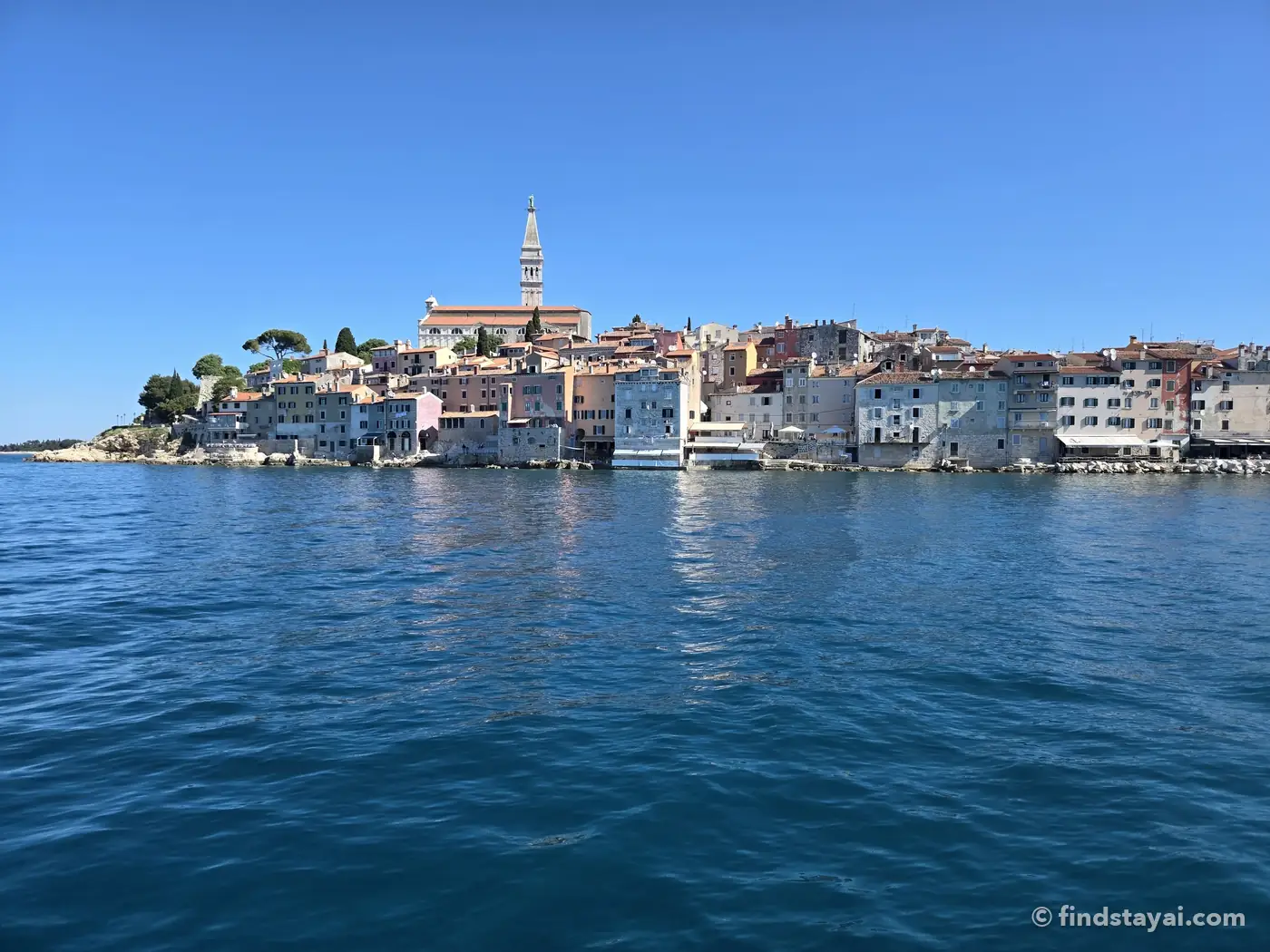
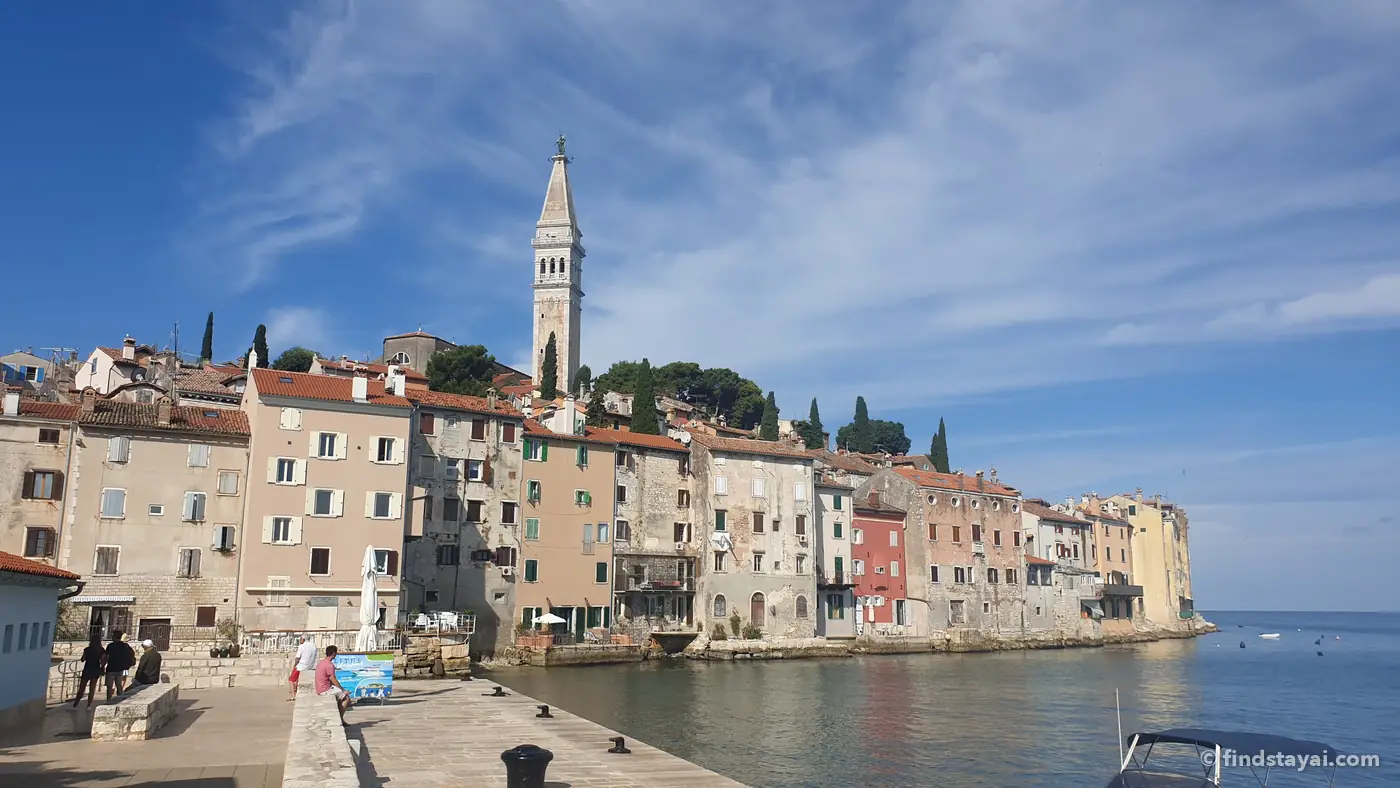
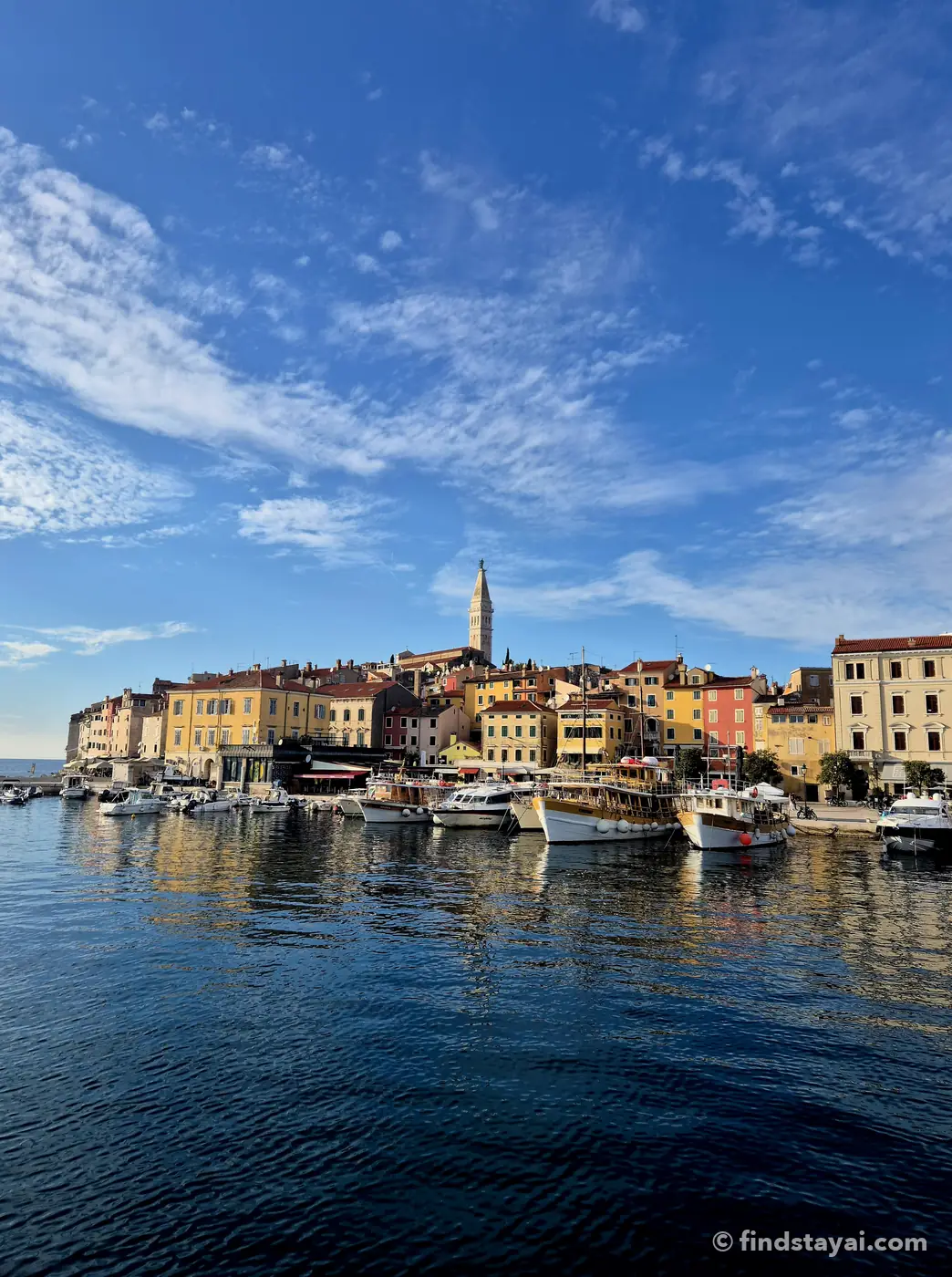
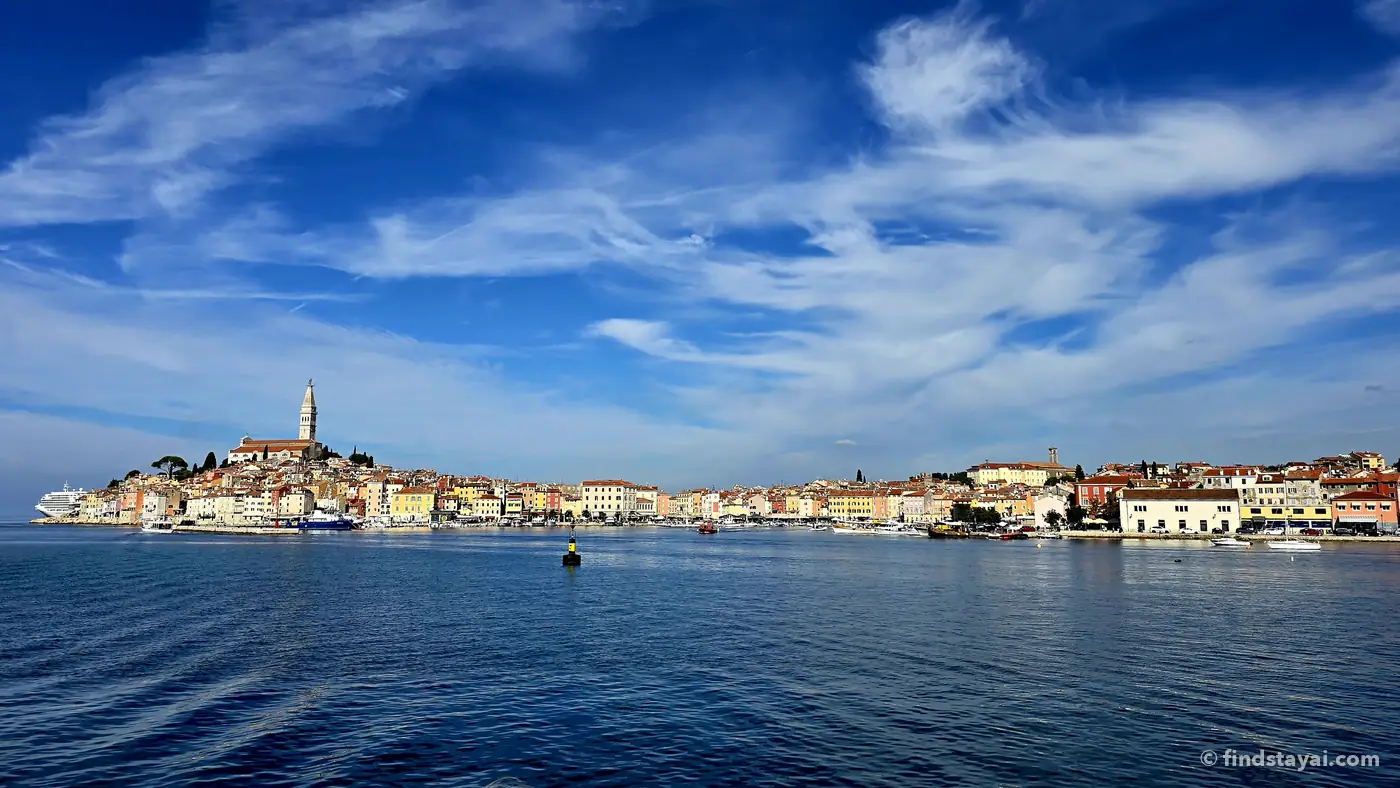
The most photogenic town in Istria: a tight cluster of tall Venetian houses on a small peninsula, crowned by the bell tower of St Euphemia and ringed by clear coves.
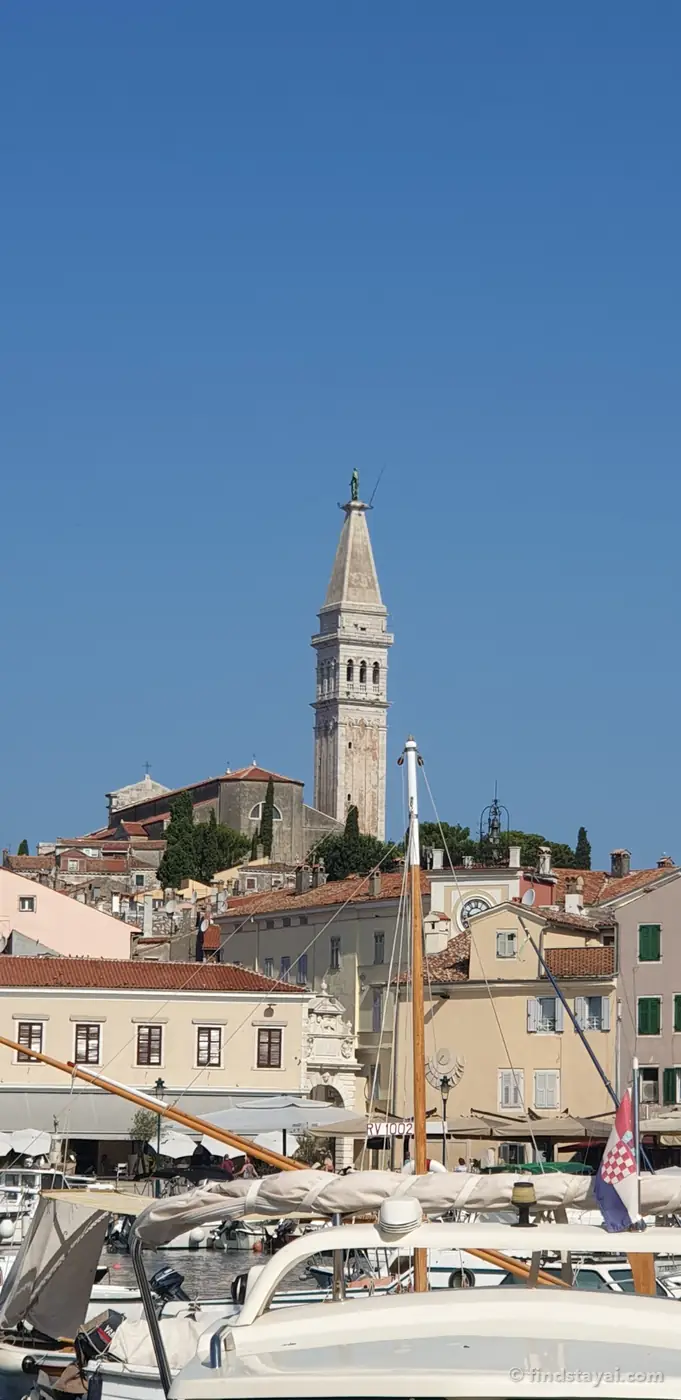
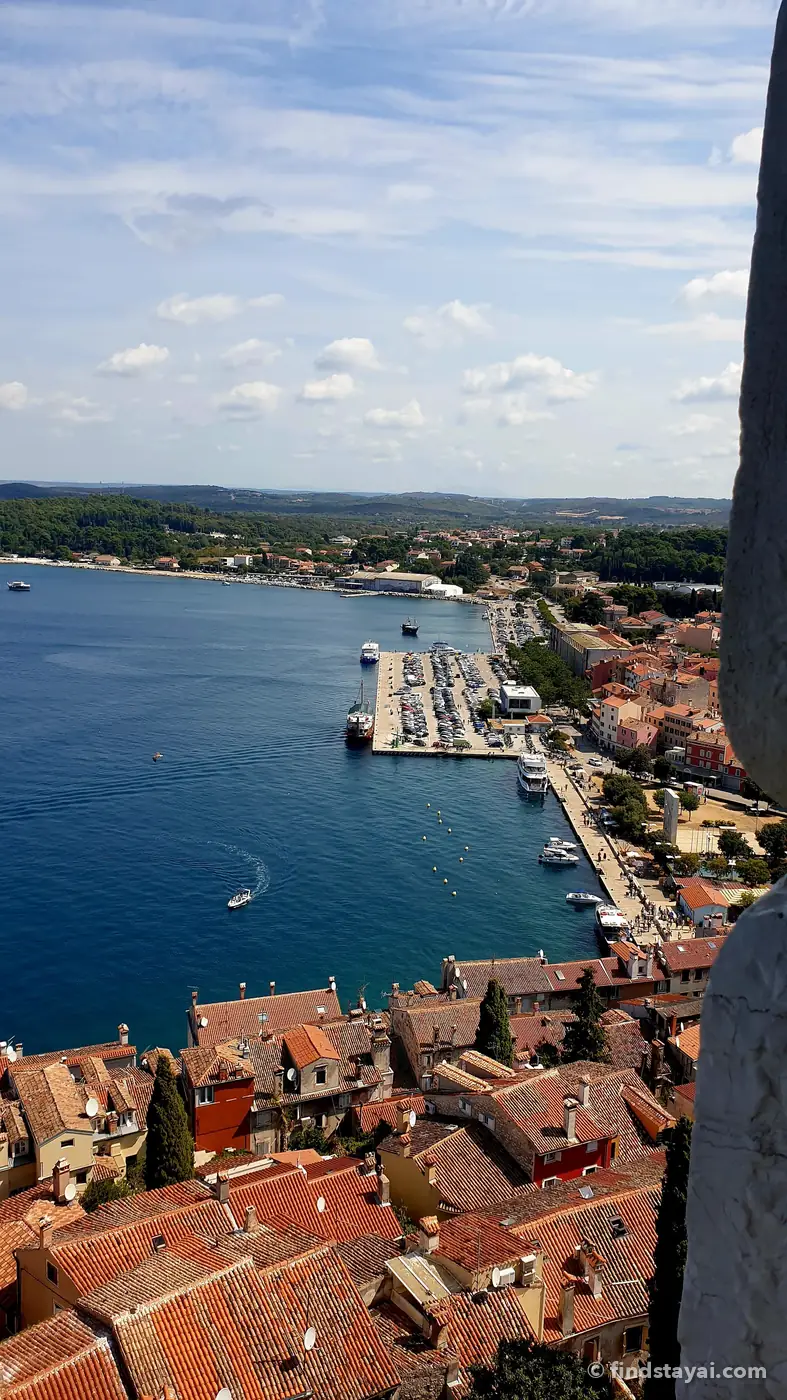
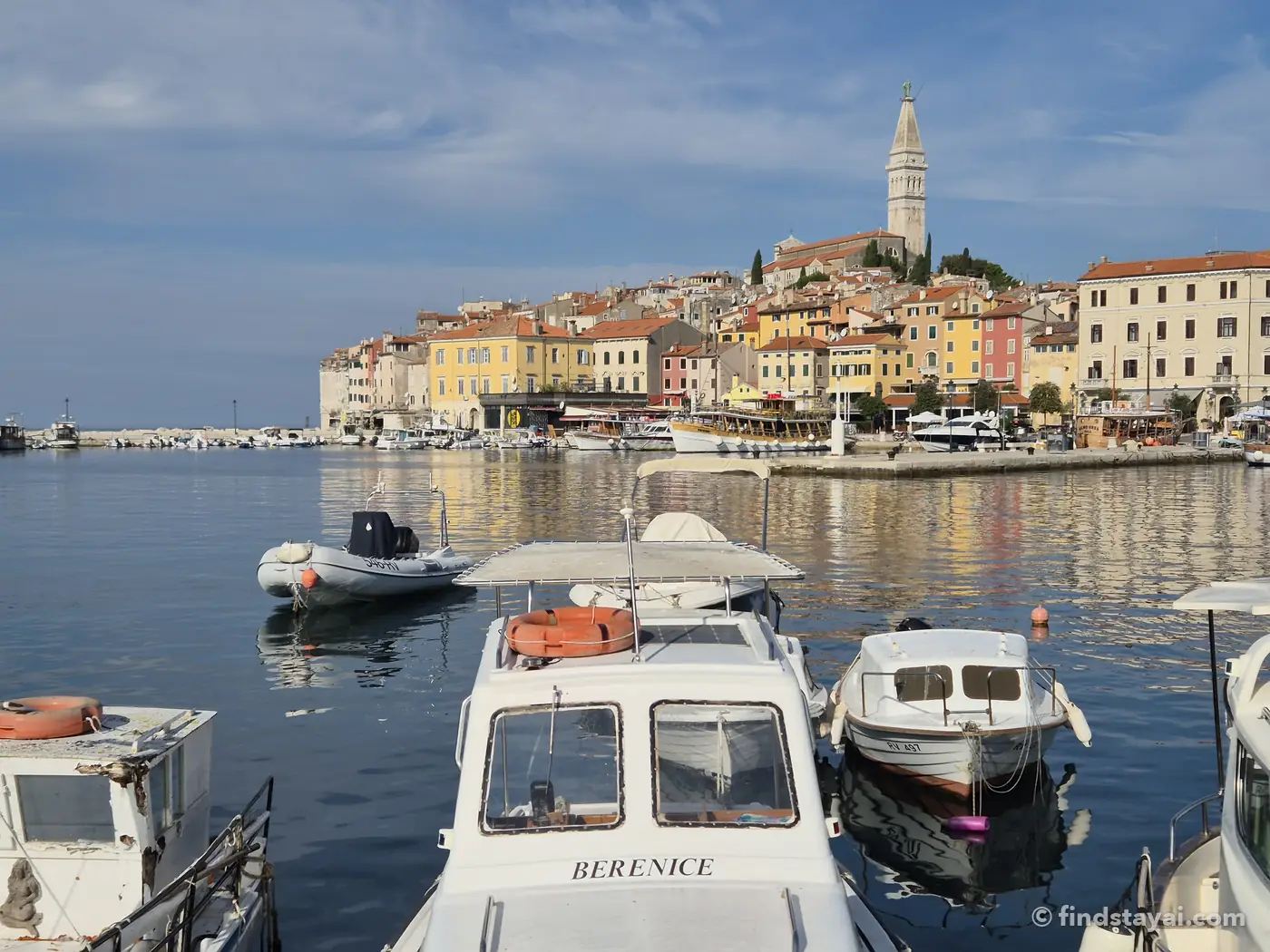
Search stays in RovinjRovinj's old town is a maze of narrow, steep lanes climbing to the church of St Euphemia, whose 62-metre tower is the tallest in Istria and the landmark you see from everywhere. Below, the harbour is lined with cafés and fishing boats, and the wooded Zlatni Rt (Punta Corrente) park just south of town hides swimming spots among the pines.
It is romantic and busy in season, so it rewards staying a night or two rather than day-tripping — the town is at its best early morning and after the day crowds leave. Beaches are pebble and rock; some of the nicest swimming is off the little island of St Catherine or along the Zlatni Rt shoreline.
Where to stay in Rovinj
Rovinj is compact, but where you sleep changes the feel of your stay a lot. Here is how the old town, the coastal suburbs north and south of it, and the villages just inland compare.
Old town
The old town fills a small hill that was once an island, with steep cobbled lanes winding up to St Euphemia. Staying here puts cafés, the harbour and sunset swims off the rocks on your doorstep, which suits couples and anyone who likes an evening stroll. The flip side: the lanes are largely pedestrian-only, so you park on the edge of town and carry bags up slippery stone steps. Rooms tend to be small and sought-after in summer. It is not ideal for young children with pushchairs or for anyone with limited mobility.
Centre and harbour edge
The streets just outside the old walls, around the main harbour and the Valdibora area, give you most of the atmosphere with far less climbing. You can walk into the old town in a few minutes and reach the promenade towards Zlatni Rt without a car. Parking is easier than inside the historic core, though still tight in July and August, so a stay with its own space is worth a lot here. A good all-round base for a short break, and for first-time visitors who want everything on foot.
Borik
A quiet residential neighbourhood on the northern side of town, about 2.5 to 3 km from the old town. Streets are mostly dead-ends lined with family houses and gardens, so there is little through traffic, and the shallow Borik beach is close by. It suits families and anyone who wants a calm evening after a busy day in town. The old town is a short drive, a pleasant bike ride or roughly half an hour on foot. Private parking is usually easy to find with a stay here.
Monsena, Valdaliso and Amarin
Further up the coast to the north, this strip is dominated by large holiday resorts and campsites set among pines, with private apartments on the streets behind them. The beaches are pebble with gradual entries and good summer facilities, which makes the area popular with families. Some beach areas belong to the resorts, and non-guests may be charged a small fee to enter in season. You will want a car or bike to get into town, but in return you get space, shade and easy parking.
Rovinjsko Selo
A small village roughly 6 to 8 km inland on the road towards Kanfanar, and one of the places listed among our Rovinj stays. It has grown into a quiet suburb of Rovinj, with holiday homes and apartments among fields and olive groves. You swap sea views and walk-to-the-beach convenience for peace, more space and often a garden or pool at a lower price than town. A car is essential. It suits families and groups who plan to explore Istria rather than stay put.
Bale
A compact medieval hill village about 6 km from Rovinj towards Pula, with cobbled alleys, stone houses and a relaxed, rural feel. Evenings are quiet, and the long, wild coastline below the village, around Colone and the Mon Perin area, has plenty of pebble coves for swimming. Bale works for couples and families who prefer a slower pace and do not mind driving to the sea and into Rovinj. Parking is straightforward compared with town.
Beaches
Mulini
The polished town beach just south of the marina, a short walk from the centre. It is mostly smooth concrete platforms and landscaped rock with easy ladders into the water, plus a beach bar. Natural shade is limited, so bring or rent an umbrella. It is stylish and convenient, and it gets crowded in mid-summer.
Lone Bay
A pebble bay between Mulini and the entrance to Zlatni Rt, about 1.5 km from the old town. The entry is fairly gentle, which suits children, and pines give shade behind the beach. There is a beach bar. You reach it on foot or by bike along the seafront promenade, as the area is closed to cars.
Zlatni Rt (Golden Cape)
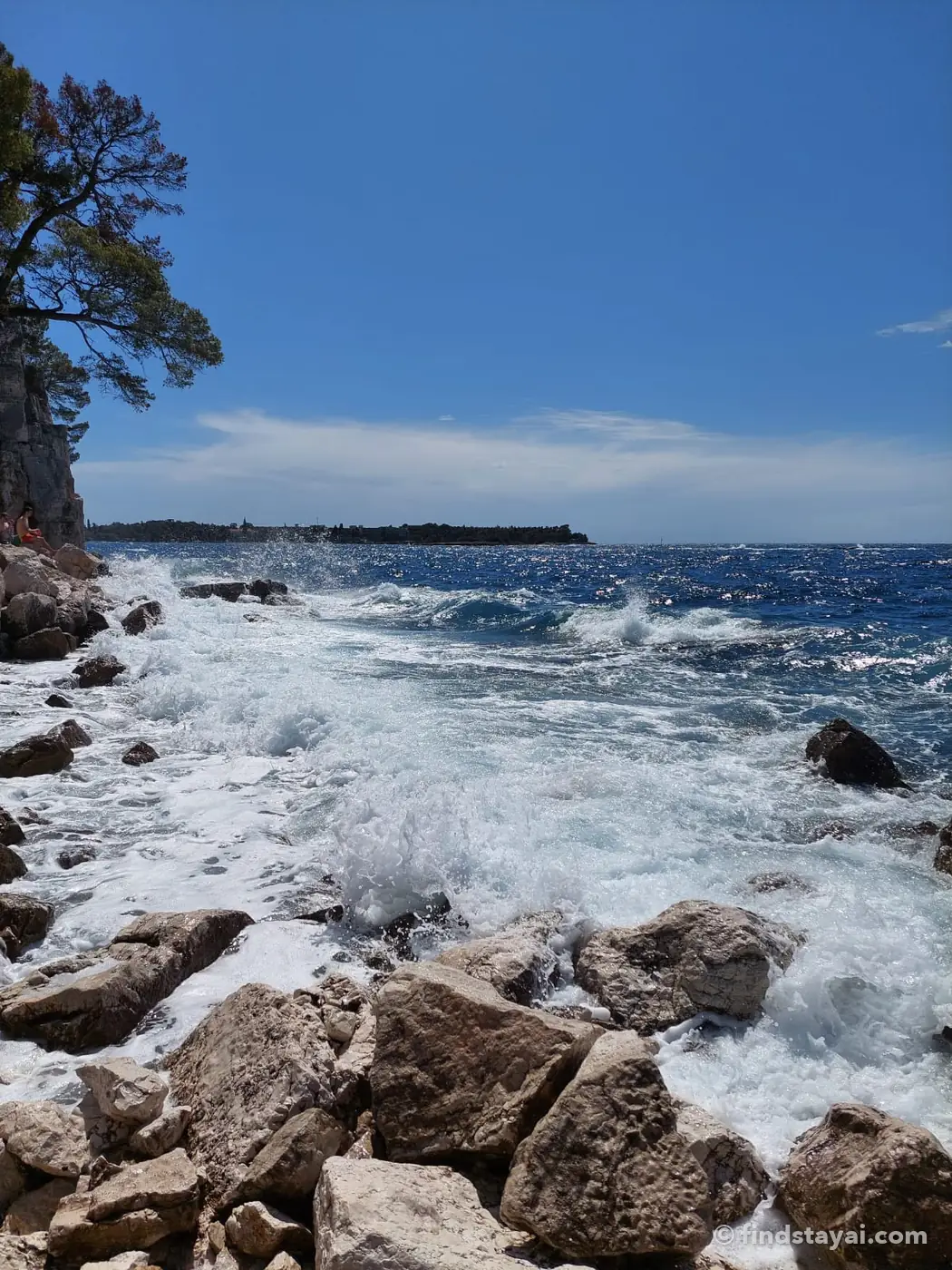
Not one beach but a protected forest park full of rocky shores and small coves. Pine shade is everywhere and the water is very clear, but facilities are few, so bring water, a towel and water shoes. Walk or cycle in along the paths; a section of the shore is marked for naturists.
Cuvi
South of Zlatni Rt, near the Polari campsite. A mix of pebbles and rock with a gradual entry and trees for shade, and usually a bit more room to spread out than the beaches closer to town. A good pick for families who want a quieter day.
Borik
On the northern side of town, with small, almost sand-like pebbles and water that stays shallow a long way out. That makes it one of the easiest beaches in Rovinj for small children. There is some shade, and it is busy in July and August.
St Catherine and St Andrew islands
Boat taxis from the harbour take about 15 minutes to reach the islands just offshore. Swimming is off rocks and small coves, facilities are limited, so pack a picnic. A good way to escape the busiest town beaches for a few hours.
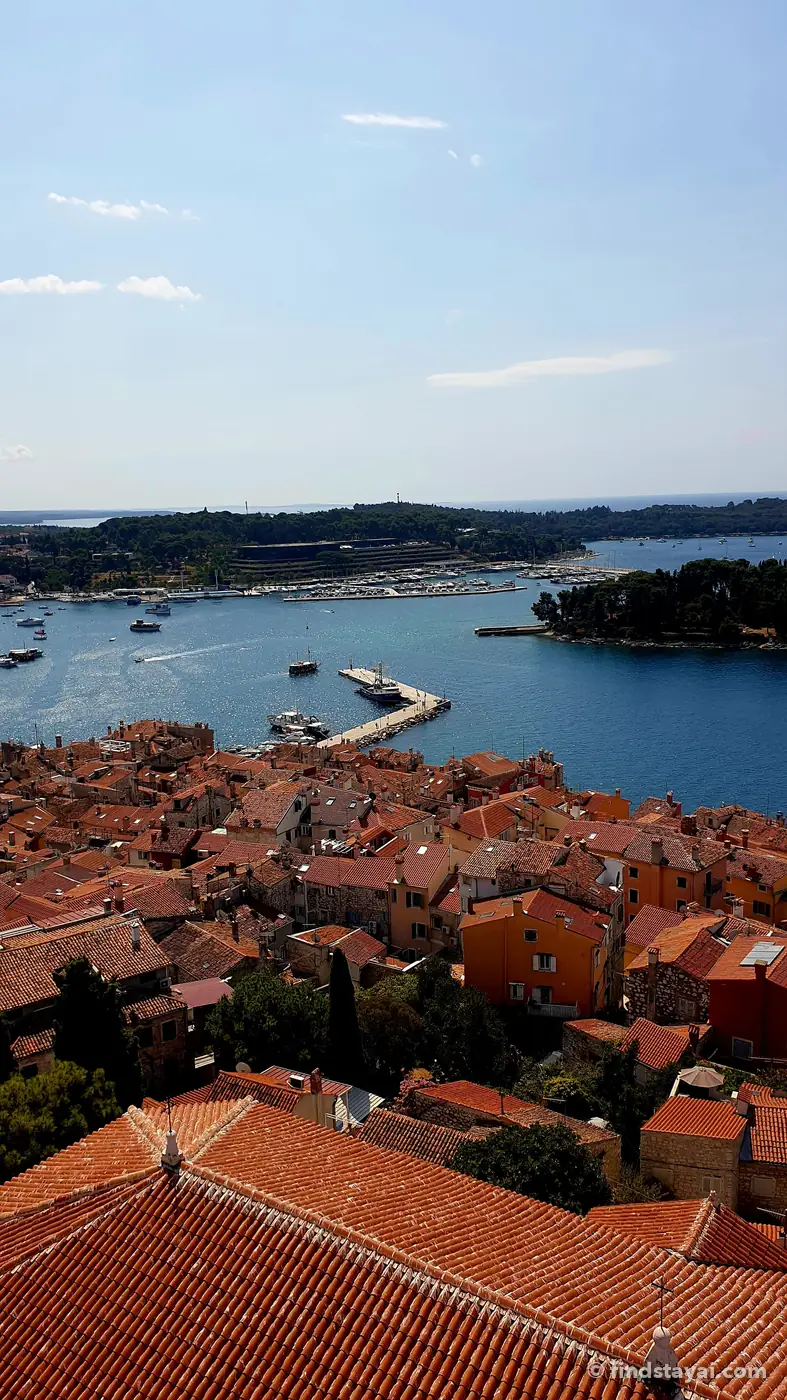
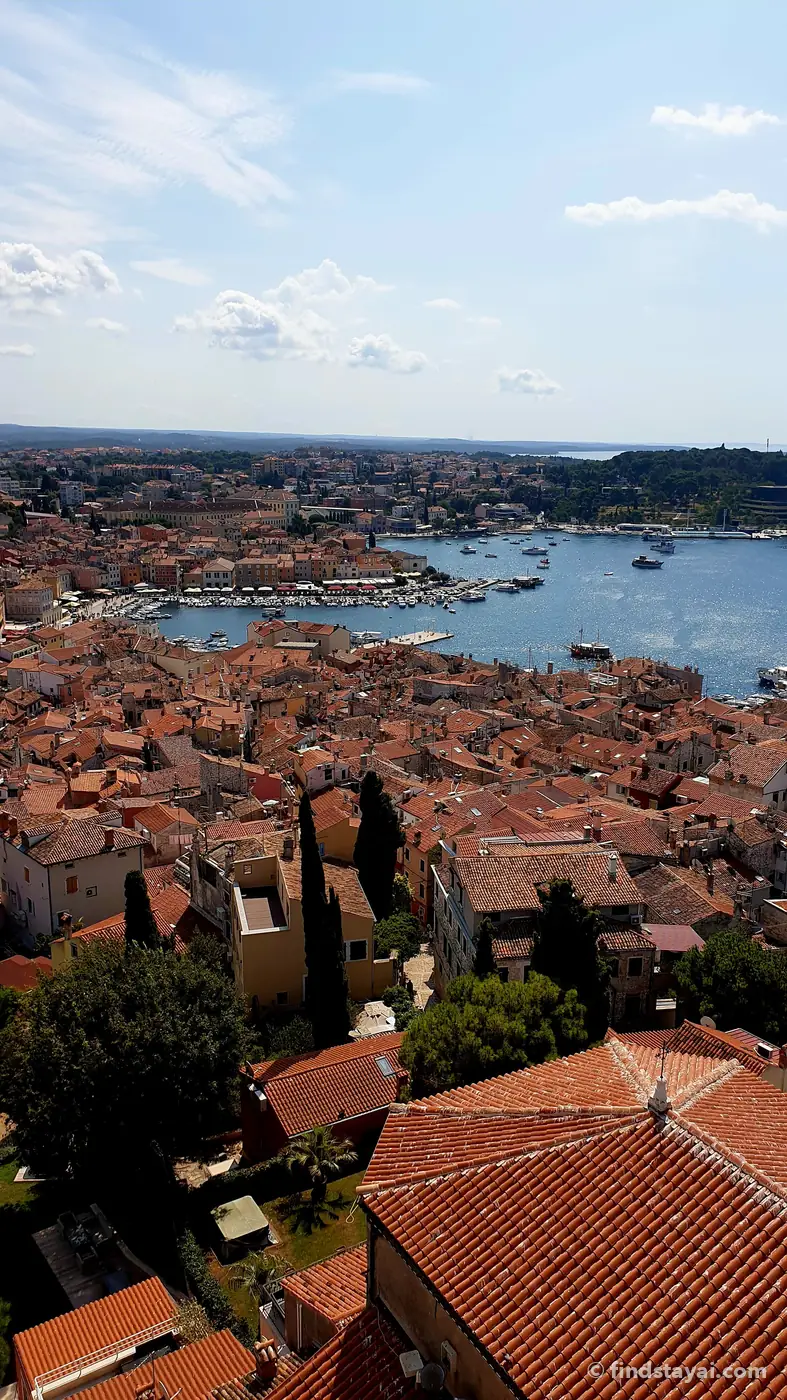
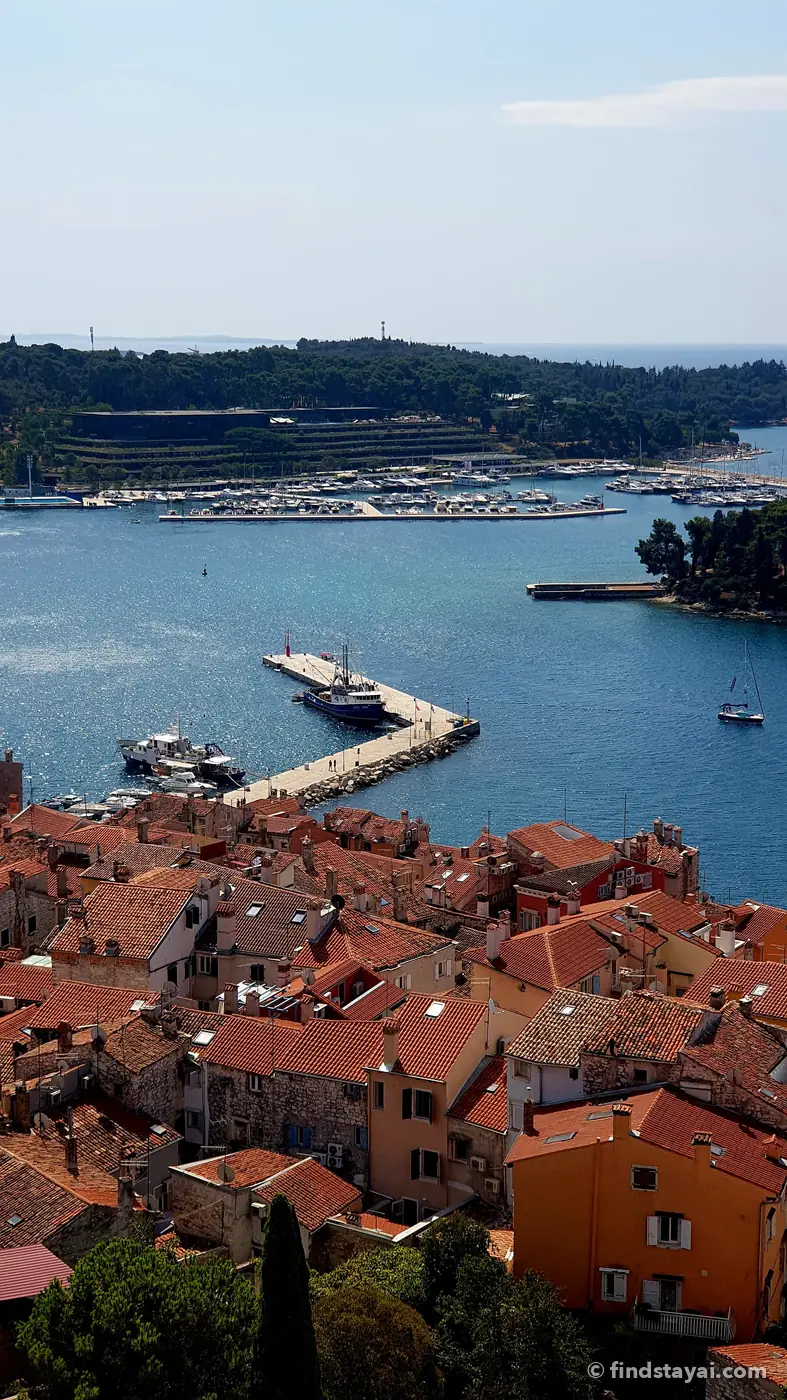
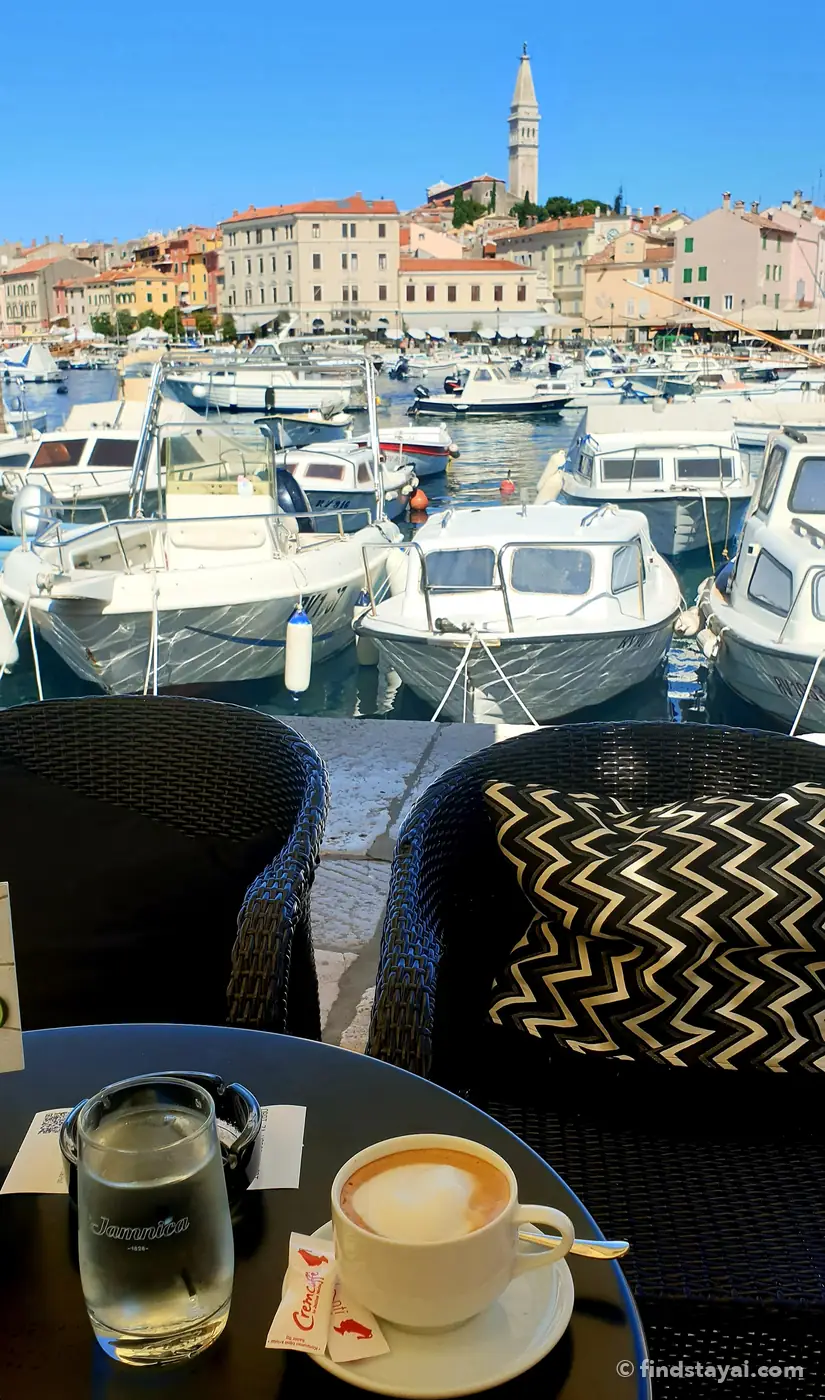
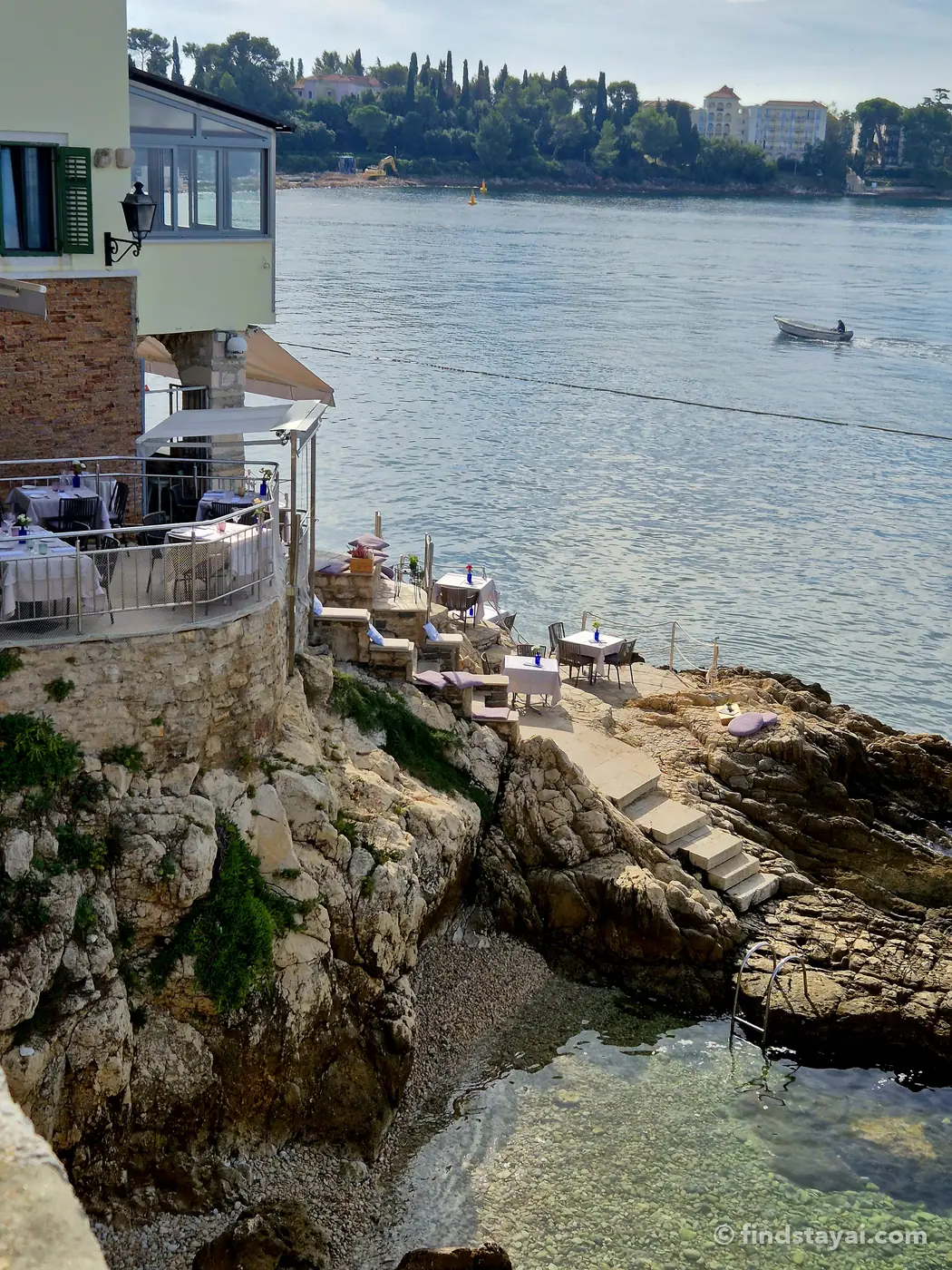
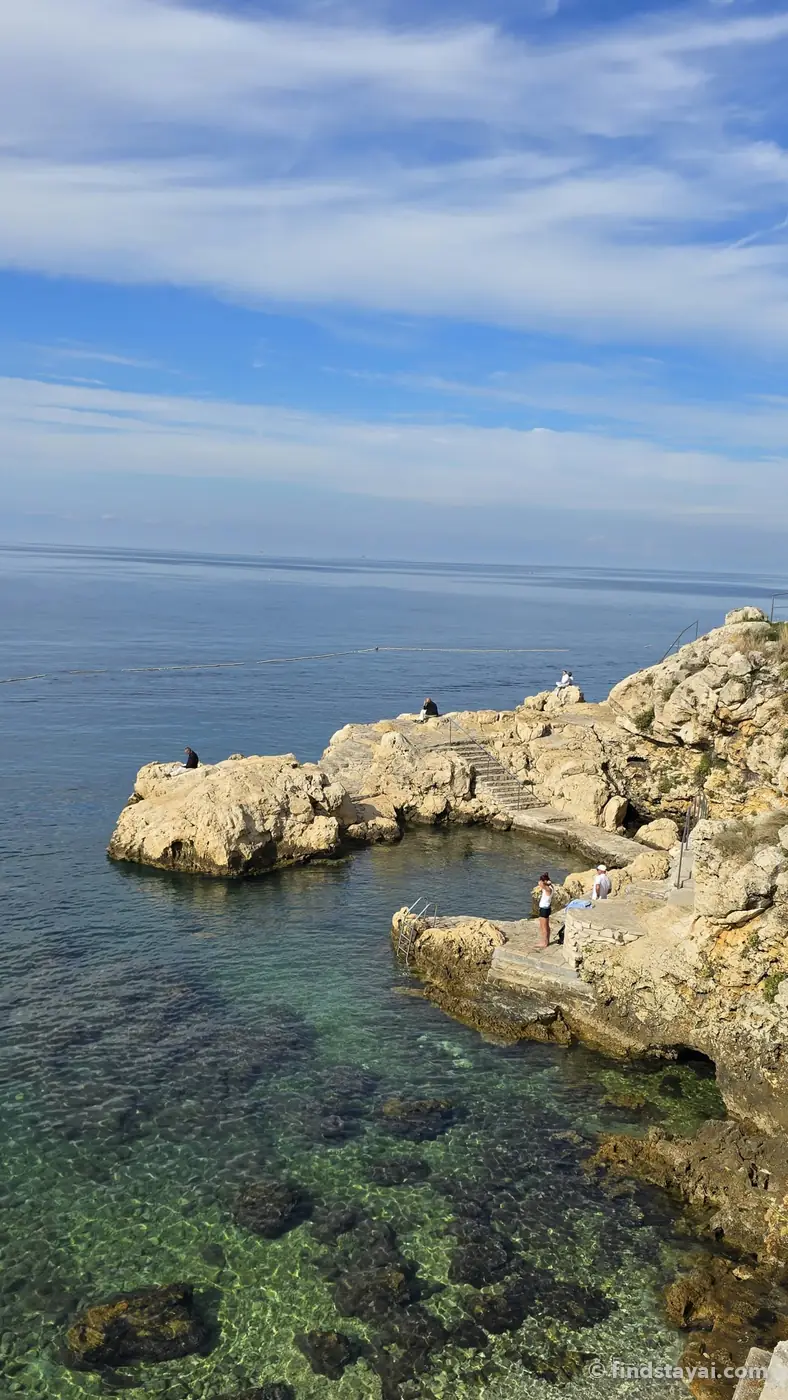
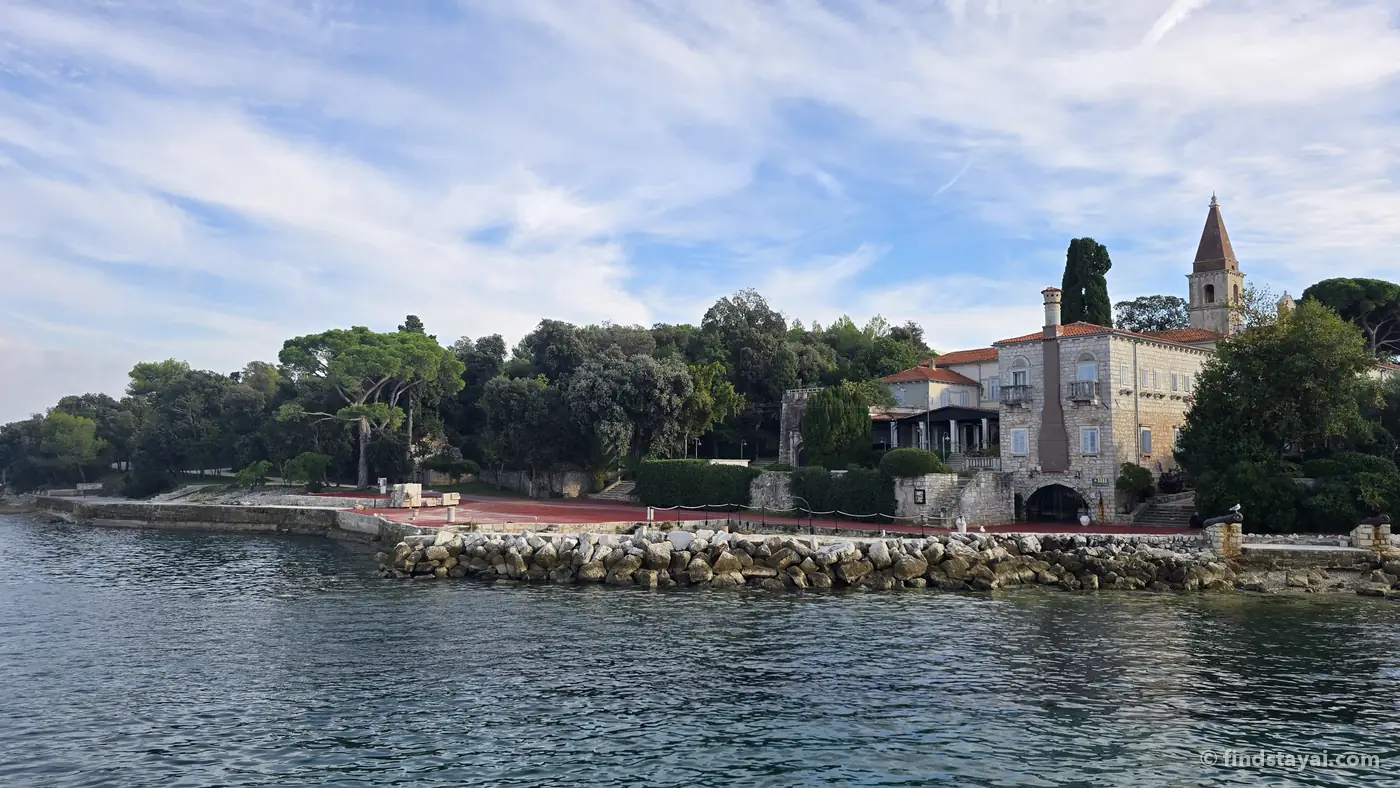
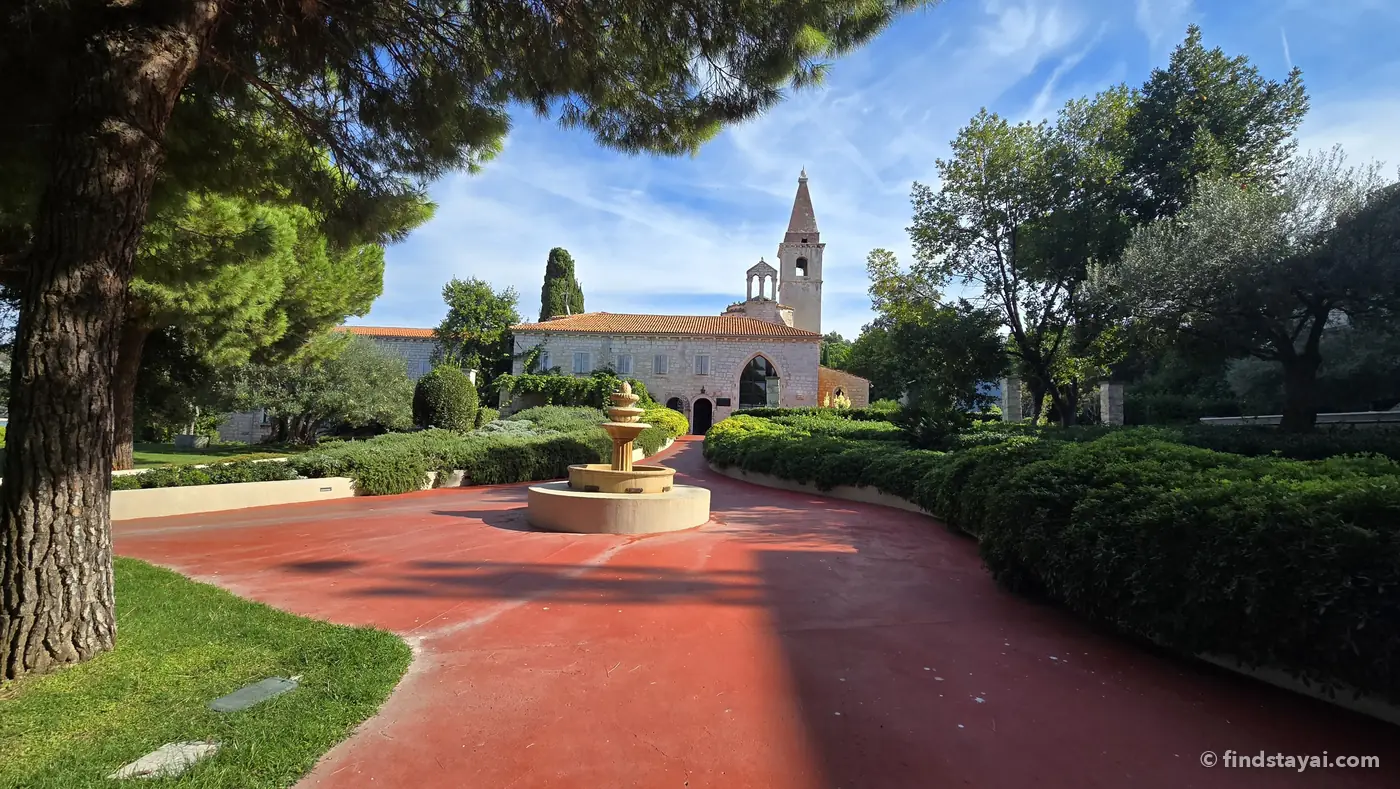
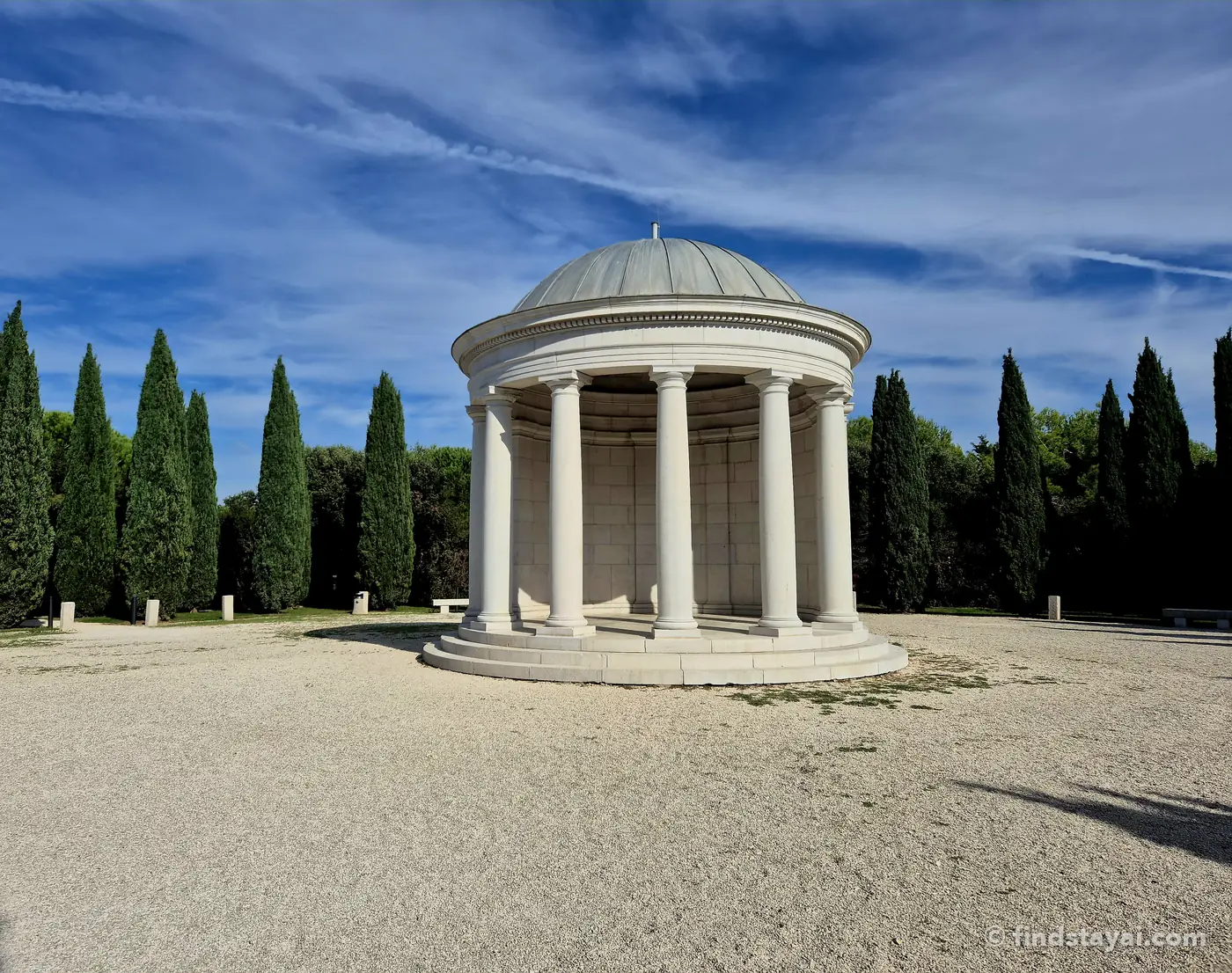
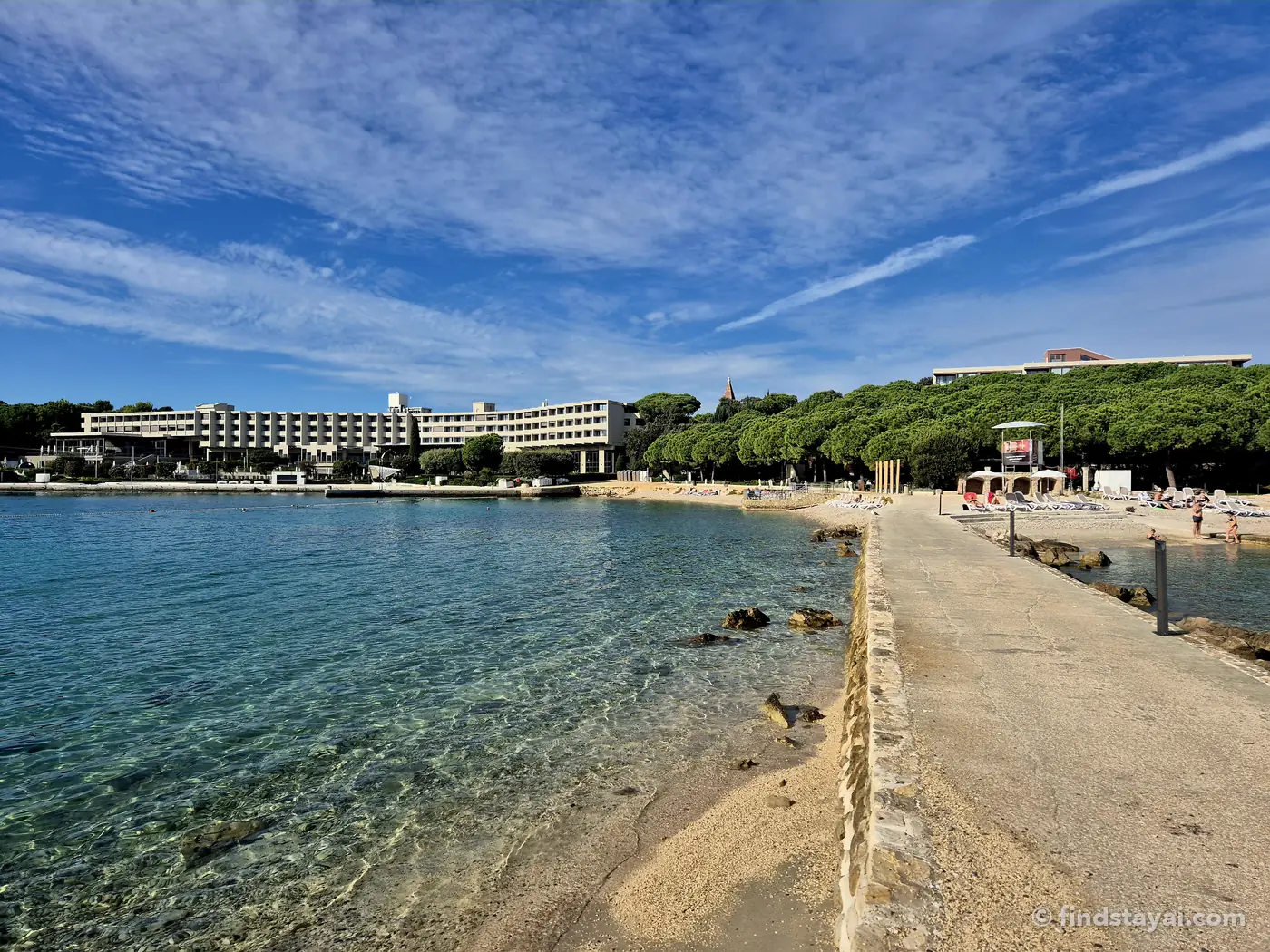
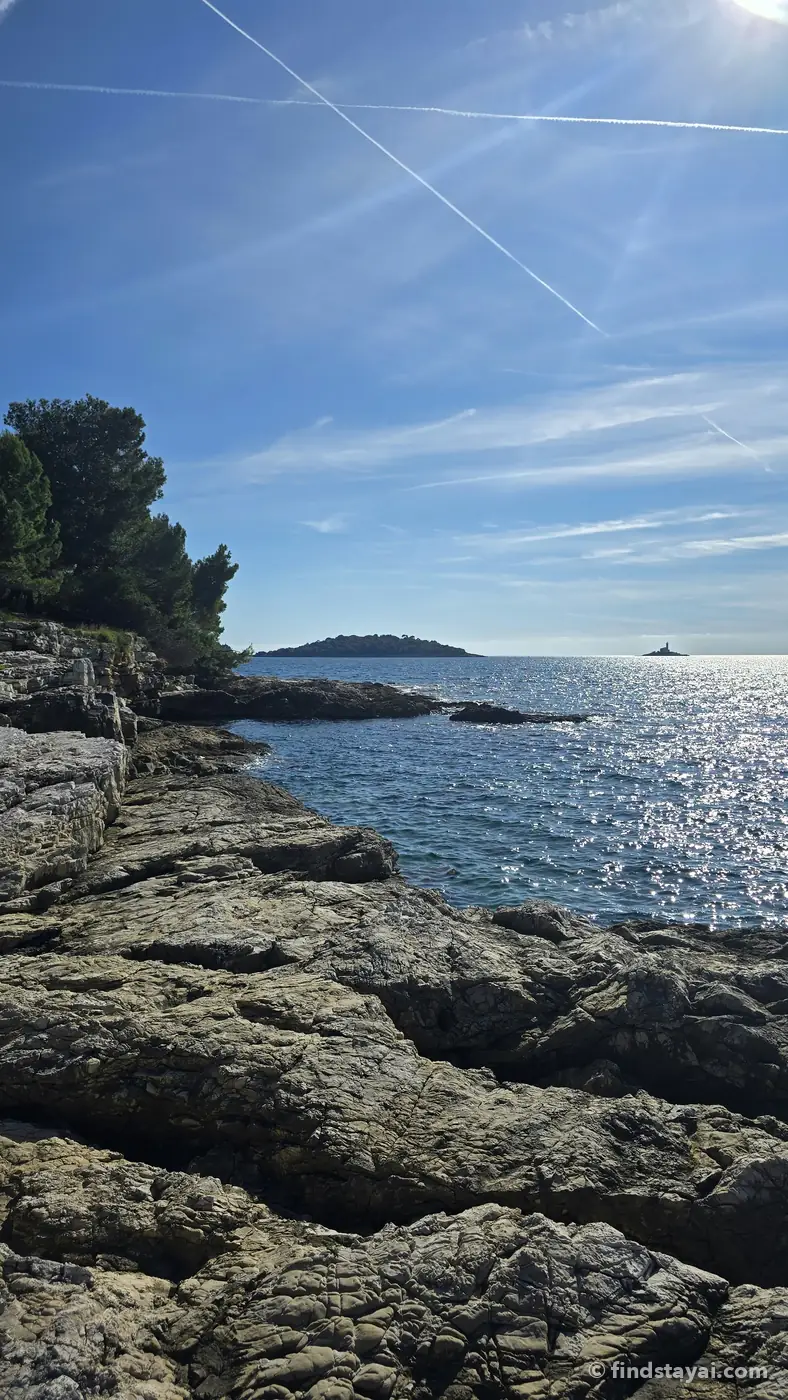
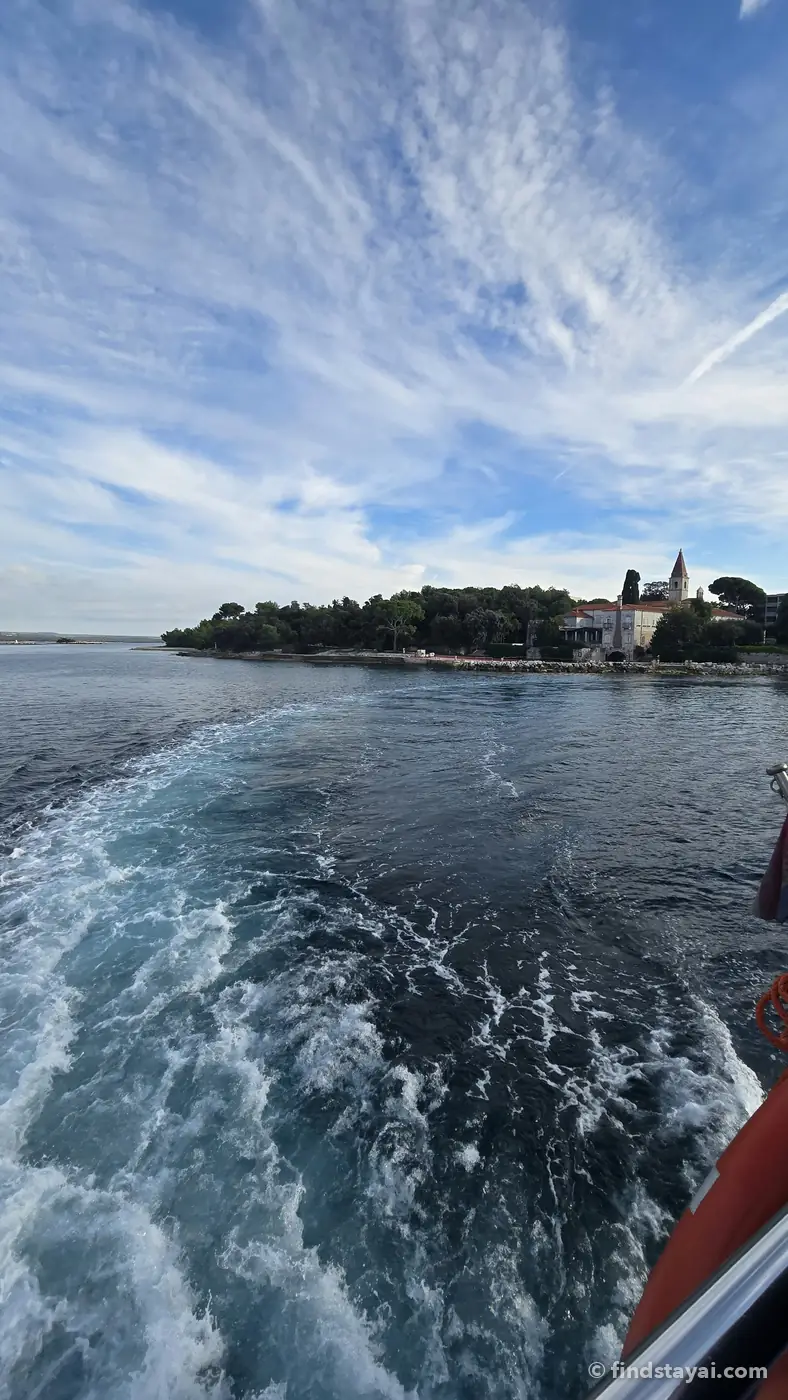
Our photos: Rovinj
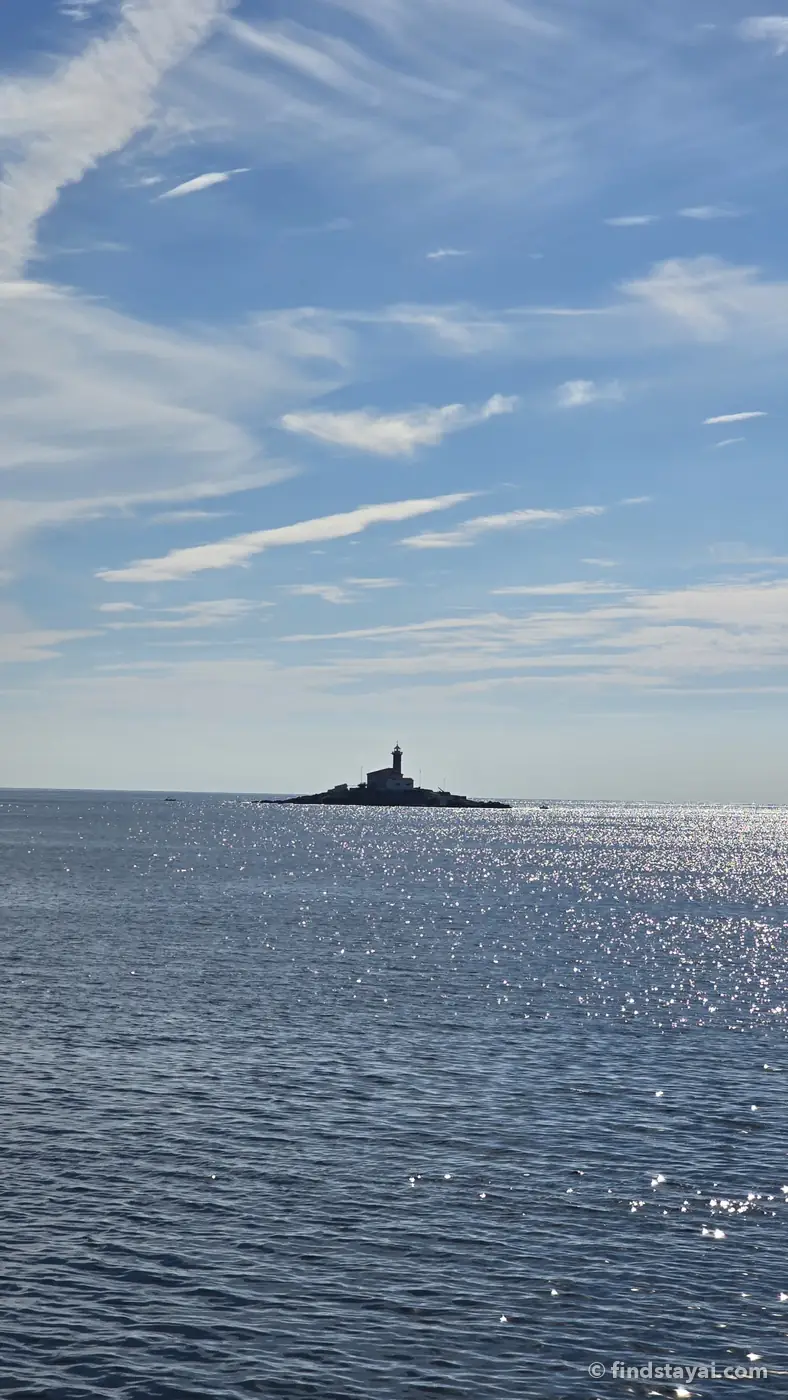
Taken by our team on the coast. Tap a photo to open it larger.
Getting there and around
The nearest airport is Pula, about 40 km south; the drive takes around 35 to 40 minutes, and there are also buses and shared shuttles. Trieste in Italy is the other common choice for the northern Adriatic, and Zagreb is roughly three hours away by motorway through the Učka tunnel. Rovinj is a short hop off the Istrian Y motorway at Kanfanar. There is no train station in town. In season, fast passenger catamarans link Rovinj with Venice, which makes a two-centre trip easy without a car.
Once you arrive, the old town and its seafront are best explored on foot, and the promenade south to Lone Bay and Zlatni Rt is flat and pleasant for walking or cycling. Parking is the main headache. The closed car parks at Valdibora, just north of the old town, are about five minutes' walk from the harbour but fill quickly in summer, so arrive before mid-morning. Most of our Rovinj stays come with parking, which is worth checking before you book, especially in or near the centre.
When to go
July and August are peak season: hot, lively and busy, with the old town packed by midday and prices at their highest. Late May, June and September are the sweet spot, with warm sea, calmer lanes and better value; the sea is typically around 21 to 23°C in June, 26 to 27°C in high summer and still 23 to 25°C in September. October brings cooler swimming and truffle season inland. From November to March many restaurants, beach bars and boat trips close or cut their hours, but the town is peaceful and cheap. The Grisia open-air art exhibition fills the street of the same name on a Sunday, usually in August.
The pirate legend of the Lim Channel
Captain Henry Morgan, a treasure in the ruins of Dvigrad and a village said to bear his name: the story, the history and a day trip from Rovinj.
Good to know
- Swimming is off pebble and rock coves — Zlatni Rt park and St Catherine island are the local favourites.
- The old town is car-free and steep; look for a stay with parking nearby and pack light.
- It gets very busy midday in summer — mornings and evenings are calmer and cooler.
- Great base for the rest of Istria: Poreč, Pula's arena and the hill towns are all short drives.
Where people stay
Popular spots in and around Rovinj:
Stays in Rovinj right now
Loading current offers…
Frequently asked questions
Does Rovinj have sandy beaches?
Not really. Rovinj's beaches are pebble, rock or smooth concrete platforms, and the pebbles at Borik are the closest you will get to sand. The upside is very clear water. Pack water shoes for the rocky coves in Zlatni Rt and around the islands. If a sandy beach is a must, look at Medulin further south or at Rab and Krk in Kvarner.
Is Rovinj good for families?
Yes, as long as you choose the right base. The steep, car-free old town is hard work with small children, but Borik and the resort area around Monsena and Amarin have shallow pebble beaches, shade and easy parking. Lone Bay, a walk or bike ride from town, also has a gentle entry into the water. Many of our Rovinj stays are family-friendly apartments.
Do I need a car in Rovinj?
Not if you stay in or near the centre and mainly want the town and its nearby beaches, which you can reach on foot or by bike. A car becomes useful if you stay in Borik, Rovinjsko Selo or Bale, or want to see Pula, Poreč and the hill towns. If you bring one, choose a stay with its own parking, as public spaces fill up fast in summer.
How far is Rovinj from Pula airport?
About 40 km, which is roughly 35 to 40 minutes by car or taxi. Buses and shuttles also run between the airport or Pula and Rovinj, though they take a little longer and run less often outside the main season. Trieste airport in Italy is another option, but it is further away.
When is the cheapest time to stay in Rovinj?
Outside July and August. June and September usually offer noticeably better value while the sea is still warm enough for comfortable swimming. Spring and late autumn are cheaper again, although fewer restaurants and beach bars are open. Winter is the quietest and cheapest time, and it suits a city-style break more than a beach holiday.
Where should I stay in Rovinj without a car?
Stay in the old town or on the streets just around the harbour and Valdibora. From there you can walk to restaurants, the harbour boat taxis and the seafront path to Mulini, Lone Bay and Zlatni Rt. Pack light, as the old town lanes are steep and cobbled and cars cannot reach most doors.
Find your stay in Rovinj
Describe what you need — dates, who's travelling, budget, how close to the beach — and our AI finds matching apartments, rooms and houses.
Start your search →Live availability and prices come from our booking partners. Numbers above are approximate and change with the season.